Operations | Monitoring | ITSM | DevOps | Cloud

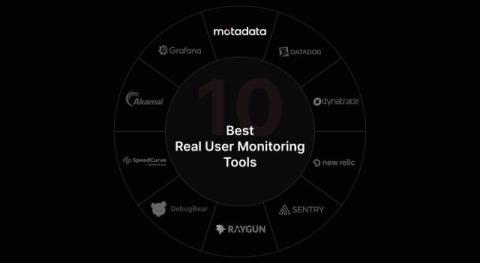
10 Best Real User Monitoring Tools Compared for 2026

Most IT teams learn their application feels slow when a customer complains. Server metrics never measure what a person on a phone waits for. The best real user monitoring tools close that gap by collecting timings from your users' browsers. Choosing one got harder this year, because the measurement standard moved. In this blog, we compare the best tools for real user monitoring, including their pros, cons, and key features. By the end you will know which one fits your stack.

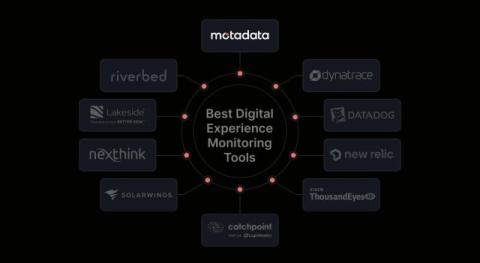
Top 10 Digital Experience Monitoring Tools in 2026

Server dashboards can look healthy while users wait. Only 51% of the 1,000 most popular mobile sites pass Core Web Vitals, according to the HTTP Archive's 2025 Web Almanac. Closing that gap is the job of digital experience monitoring tools. Some watch customers on your website and mobile apps, others watch staff on laptops and virtual desktops, and a third watches the network in between. Pick the wrong type and you lose a review cycle.

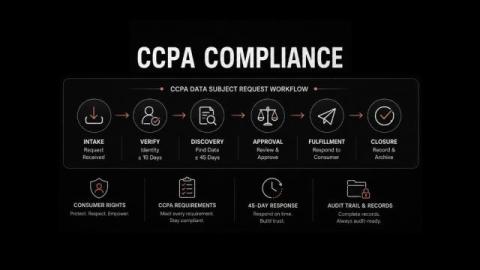
CCPA Compliance for IT Teams: How to Handle Data Subject Requests on Time

How many privacy requests is your organization working on right now, and how many of them are still inside their legal deadline? The answer usually lives in several places at once. Shared mailboxes hold some, web forms hold others, and legal keeps a tracker of its own. That scattering is the problem. A CCPA request carries a hard statutory deadline and a documentation duty behind it, yet privacy work is the one regulated workload in most organizations that never entered the service management system.

What Is Session Replay? How It Works, What It Records, and When It's Legal

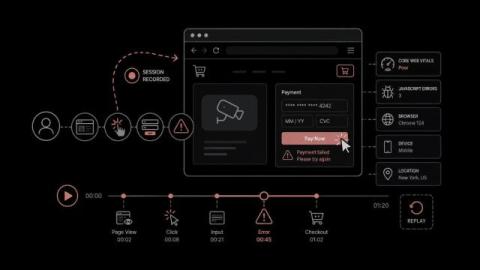
A customer reports that checkout failed twice before they gave up, then stops replying to the support thread. What do you actually have to work with? A timestamp, a browser string, and a description written by someone who was not looking at the console. Session replay answers the question that ticket cannot. It rebuilds that single visit in the browser and plays it back step by step, so the click that failed, the field that rejected input, and the script error that fired alongside it appear in sequence.

Cloud Incident Management: Process, Tools, and Practices

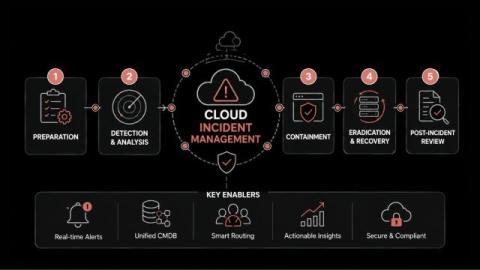
How do you resolve an outage your organization has no authority to fix? A managed database drops into read-only mode and stops accepting writes. There's no host to reach, no configuration file to edit, and no restart command available to your engineers. Cloud incident management begins at that boundary, where the response depends on a support channel and a provider status page. Plenty of what you already know still applies here.

What Is GDPR Compliance? Requirements and How to Meet Them

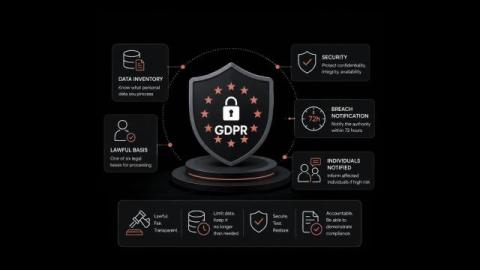
Most teams can describe their GDPR obligations. Far fewer can produce the records that prove they met them. That gap is where GDPR compliance gets hard. The regulation reads as legal text, so it usually gets treated as legal work. About a third of it lands on the IT team instead: records of what you process, security controls that have to hold up, and deadlines measured in hours. Nobody asks for that evidence on a quiet week.

Third-Party Patch Management: How Application Patching Works and Where It Breaks

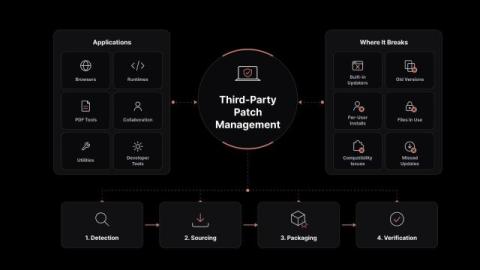
Most patch programs are built around the operating system. The vendor calendar is predictable and the tooling is mature. That is the smaller half of the job. Most of the software on a typical endpoint comes from somewhere else. Third-party patch management covers that half, and most teams run it with far less structure. The gap is easy to miss in day-to-day reporting. Windows Update finishes on a laptop, and the machine reports as patched. That report covers the operating system and nothing else.

What is Port Mirroring and How does a SPAN Port Work?

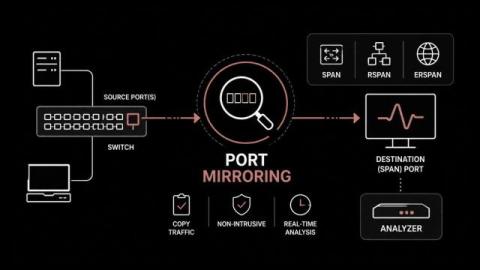
Your dashboard shows every interface green, the counters look clean, and the application owner still insists the network is dropping their transactions. Where do you look next? Availability data tells you a link is up. It cannot tell you what crossed that link or how long the server took to answer. Only the packets carry that, and port mirroring is how most engineers get a copy without cutting into a live cable.

What Is Cybersecurity Compliance? Frameworks and Requirements

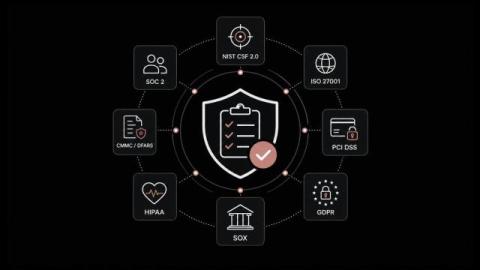
Most IT teams are asked to meet more than one security framework at once. Almost nobody gets more budget or more people to do it. That is the real shape of cybersecurity compliance. A sales deal needs SOC 2, a hospital contract drags in HIPAA, and card payments put PCI DSS on top of both. Each one arrives with its own auditor, its own vocabulary, and a deadline somebody set without asking you. So the same controls get built three times over.

What is Network Intelligence? A Guide for IT Teams

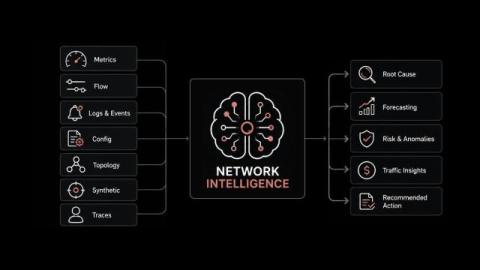
"This is the third slowdown at the regional offices this quarter. What is actually causing it, and what will it cost us to stop?" Questions phrased like that come from a business head rather than an engineer, and a dashboard screenshot will not answer them. Most network operations groups can produce evidence that something happened. Producing an explanation of why it happened, in language a finance director will accept, takes hours of manual correlation across separate consoles.

What Is sFlow? A Guide to Sampled Flow Monitoring

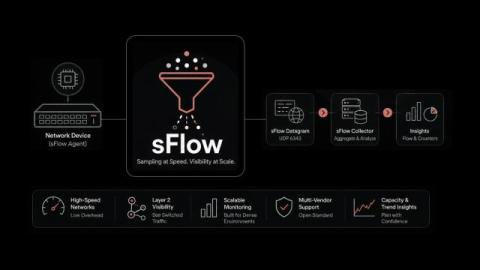
What do you do when the switch carrying most of your traffic is the one device that cannot tell you what is on it? On high-speed core and data centre links, full flow export pushes device CPU past a comfortable line, so the export gets switched off and the busiest segment quietly becomes the least visible one. sFlow was built for that exact situation.

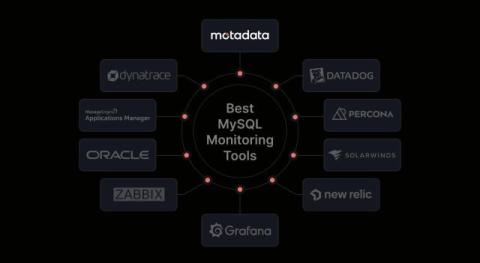
10 Best MySQL Monitoring Tools Compared for 2026

Your monitoring console probably covers the switches, the hosts, the VMs and the application traces. The database tier is the gap. It tends to live in a separate tab. Somebody opens that tab once the incident bridge has already started. That gap got more expensive this year. On 21 April 2026, Oracle moved MySQL 8.0 to Sustaining Support. The version most production estates still run no longer gets new fixes. Good MySQL monitoring tools close the gap.

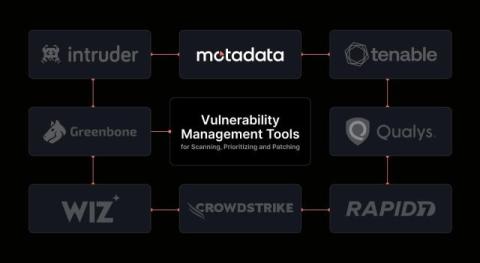
8 Best Vulnerability Management Tools for Scanning, Prioritizing and Patching

A vulnerability scanner will hand you more work in one afternoon than the service desk can clear in a quarter. Thousands of findings arrive ranked by severity, every one of them technically actionable. Fixing them takes weeks, and in most organizations the backlog grows faster than it clears. That gap is what this guide is about. Every tool here scans reliably, scores findings sensibly and reports clearly.

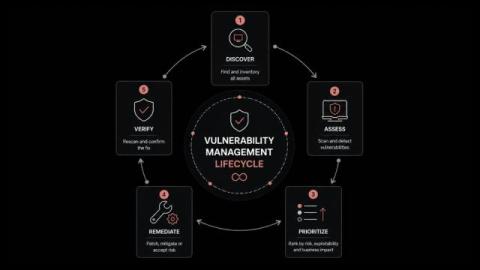
How the Vulnerability Management Lifecycle Runs from Discovery to Verified Fix

Who in your organization can say, without opening three separate systems, whether last month's critical findings are actually closed? A deployment record answers half of that. The other half needs a rescan, and the rescan often never happens. The vulnerability management lifecycle is that question written down as a repeatable process. It runs from knowing what you own through to proving a fix landed, and it restarts the moment it closes.

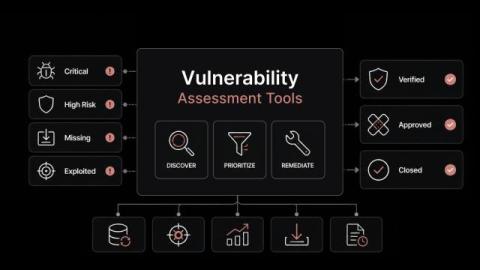
What are the Key Features and Evaluation Criteria for Vulnerability Assessment Tools?

How many findings from your last vulnerability scan have been verified as fixed? For most IT functions, the scan report is easy to produce, and the proof of closure takes far longer to assemble. That difference tends to surface at the worst possible moment, usually an audit or a post-incident review. Vulnerability assessment tools are meant to end that uncertainty. They inspect systems, match what they find against public vulnerability databases, and rank each weakness by how dangerous it is.

What Is SOC 2 Compliance? Requirements, Controls, and Evidence

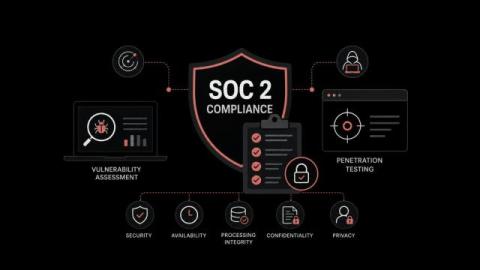
Your largest prospect has asked for your SOC 2 report. The deal sits still until you produce one. Most teams handle the first half of SOC 2 compliance fine. They control access. They run backups. They put changes through approval before anything ships. The second half is what stops them, and that half is proof. Your policy says access gets reviewed every quarter. The auditor wants the dated review, the signature on it, and the same record from eight months ago.

Vulnerability Assessment and Penetration Testing: Differences, Cadence, and Cost

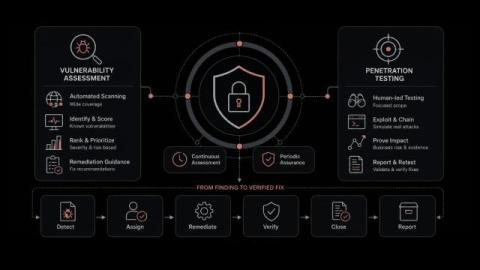
What do you say when an auditor asks for evidence that your security controls hold, and all you can produce is a scan report from last month? A scan lists weaknesses. It says nothing about whether an attacker could chain three of them together and reach the customer database. Vulnerability assessment and penetration testing answer two different questions about the same environment. The first asks what is exposed right now. The second asks what someone with intent and skill could do with that exposure.

What Is the MITRE ATT&CK Framework? A Guide for IT Ops Teams

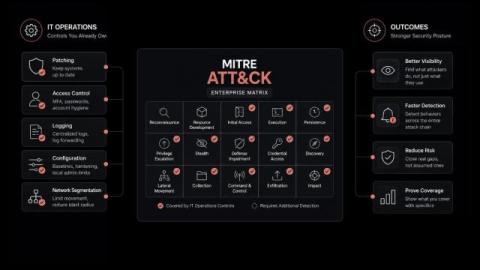
Most IT operations teams cannot say how much of the MITRE ATT&CK framework they already cover. The framework gets explained in the language of threat hunting and red teams. The parts that belong to infrastructure work are easy to miss. And then, coverage questions get answered with a guess. The mismatch costs time on both sides. Security asks for a coverage answer that ops has no clean way to produce. Yet the controls that stop a large share of those techniques already sit with your team.

What Is a Vulnerability Scan? How It Works and What the Results Mean

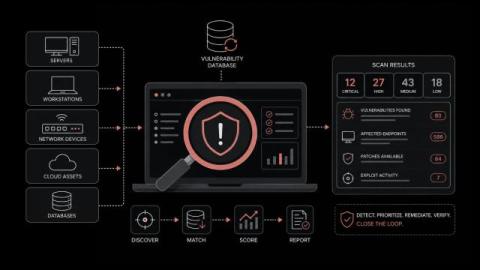
How many machines in your environment are running software with a publicly documented security flaw right now? That figure comes from an asset inventory, and asset records age quickly once they are written. The gap is rarely about tooling budgets. Software inventory across a few hundred endpoints shifts every week, while the published catalogue of flaws in that software grows every single day. Manual inspection loses that race inside the first month.

What Is Network Latency? Causes, How to Measure It, and Ways to Reduce It

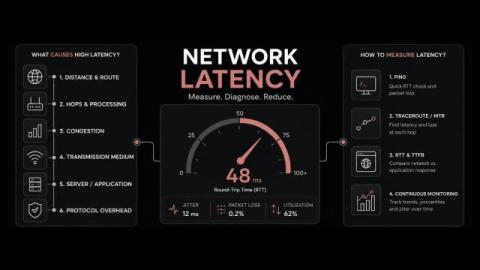
Slow application complaints are among the hardest tickets in IT to close. The network gets blamed first; the dashboard shows nothing wrong, and the ticket bounces between teams for a week. Network latency sits at the centre of that argument more often than any other metric. Most dashboards report latency as a single average, and that average hides the slow requests people actually notice. A path can average 30 ms and still drop a call every ten minutes.