Operations | Monitoring | ITSM | DevOps | Cloud



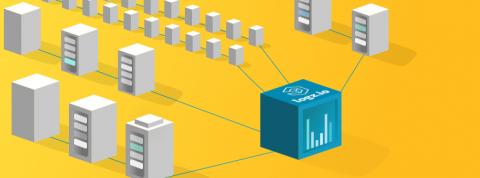
Server Monitoring with Logz.io and the ELK Stack
In a previous article, we explained the importance of monitoring the performance of your servers. Keeping tabs on metrics such as CPU, memory, disk usage, uptime, network traffic and swap usage will help you gauge the general health of your environment as well as provide the context you need to troubleshoot and solve production issues.

Apache Error Log Explained
Many online applications use a web server as the primary point of contact for their clients. At least 43% of those systems are running the Apache HTTP Server. If you’re responsible for one of those systems, you need to work with the Apache error log.
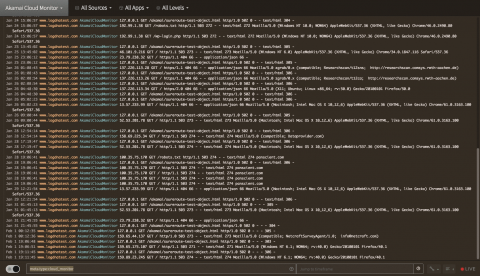
How to Send Akamai Logs to LogDNA
Akamai provides the Content Delivery Network (CDN) which is a highly-distributed platform of servers optimized to deliver contents including web and media applications. These networks enable applications to easily serve content from closer to their end users. Centralizing Akamai logs increases the ability to observe the end to end application and service delivery. LogDNA is proud to enable integration with Akamai to provide better observability and a unified view for our customers.

Search Relevance - Solr & Elasticsearch Similarities
Lucene has a lot of options for configuring similarity. By extension, Solr and Elasticsearch have the same options. Similarity makes the base of your relevancy score: how similar is this document (actually, this field in this document) to the query? I’m saying the base of the score because, on top of this score, you can apply per-field boosts, function scoring (e.g. boost more recent documents) and re-ranking (e.g. Learning to Rank).
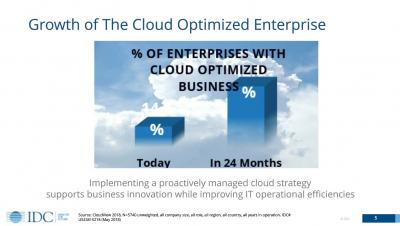
IDC: Applying Advanced Analytics and Machine Learning to Modern Network Architectures

4 Business Disasters That Could Have Been Avoided With Real-Time Anomaly Detection
Digital, network-connected systems are transforming every aspect of business — from your mission-critical workloads to your most rarely used applications. But the increases in scalability and cost efficiency come at a cost. Because every system is so reliant on network connectivity, unplanned downtime is becoming increasingly expensive.

Logging Levels 101
If you’re a software developer, then you understand how vital application logging is in software development and a critical part of logging is something called logging levels. Log entries generally contain essential information—such as a timestamp, a message, and sometimes additional stuff like an exception’s stack trace. Those pieces of information are useful because they allow someone reading the log entry to understand how the application behaved in production.
timeShift(GrafanaBuzz, 1w) Issue 79
Time is running out to get your ticket to GrafanaCon LA, but you can still grab one of the last remaining seats. We’re really excited how the schedule has shaped up and hope you can join us!