Operations | Monitoring | ITSM | DevOps | Cloud

Can an Application Exist Today Without a Database?

As a data professional, I often think about all the things around me generating data and consider where this data is ultimately being used. Have you ever taken a minute to consider exactly how much data is being generated at any point in time? I love collecting data and looking at ways it can be used and living in a “smart” home with appliances logging and reporting usage patterns certainly provides a lot of opportunities.

ICYMI - Network Monitoring and InfluxDB

At this year’s InfluxDays event, the capabilities of InfluxDB took center stage. It’s not enough to simply deploy a technology platform and hope people will use it. This isn’t a Kevin Costner movie. That’s why it’s helpful to talk about specific use cases, their typical challenges, and how InfluxDB can address those challenges. Fortunately, that’s just what Influxer Charles Mahler did for network monitoring.

Getting Started with InfluxDB and Grafana

At some point if you’re working with data, you’ll probably want to be able to visualize it with different types of charts and organize those charts with dashboards. You’ll also need somewhere to store that data so it can be queried efficiently. One of the most popular combinations for storing and visualizing time series data is Grafana and InfluxDB.

Customer Highlight: How Rune Labs is Improving Parkinson's Patients' Quality of Life Using Sensor Data Collected with InfluxDB

I recently chatted with one of our InfluxDB Cloud customers, Rune Labs, to discuss how they’re using this purpose-built time series platform. Every customer has a unique story — I love sharing their stories as well as their Telegraf, InfluxDB, and Flux tips and tricks. Keep reading to learn about Rune Labs’ approach to precision neurology, and learn from Engineering Manager Carolyn Ranti how they are using InfluxDB to collect sensor data.

Boost Your Apache Impala Query Performance with Query Spotlight

Are your Apache Impala queries running slow and not achieving peak performance? Given Impala’s complexity, troubleshooting can be very difficult. Optimizing query performance is near impossible without the right tools. Good news: Pepperdata Query Spotlight now supports Apache Impala.

Querying Data in InfluxDB Using Flux and SQL

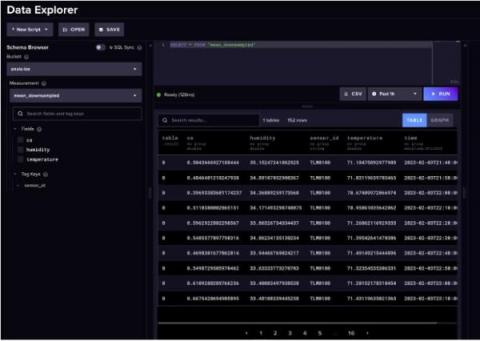
With the release of InfluxDB’s new storage engine for InfluxDB Cloud, InfluxDB Cloud now supports SQL. This is because the updated InfluxDB uses the Apache Arrow DataFusion project as a key building block for its query execution engine. DataFusion’s sophisticated query optimizations support near unlimited cardinality data in InfluxDB Cloud.