Operations | Monitoring | ITSM | DevOps | Cloud

Attack of the mutant tags!Or why tag mutability is a real security threat

Tag mutability can introduce multiple functional and security issues. In container land, tags are a volatile reference to a concrete image version in a specific point in time. Tags can change unexpectedly, and at any moment. In this article, we’ll learn how we can prevent them.

Simplify Installation and Maintenance with the Project Calico Operator

Within the Kubernetes ecosystem, the Operator Pattern aims to encode the tasks that human operators perform with installing, maintaining, and upgrading infrastructure. It goes beyond manifests and Helm charts to add additional logic to manage critical services. Starting with the 3.15 release, Project Calico will provide an operator for managing Calico installations on Kubernetes clusters.

Leveraging the Database Performance Analyzer API

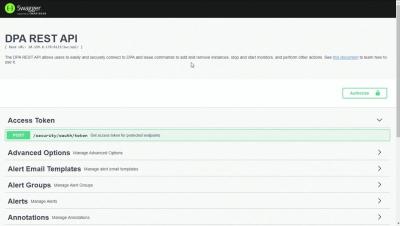
The RESTful API for Database Performance Analyzer is an incredible time-saver if you are working in an environment where databases go in and out of production. You can easily hook a pre-existing automation job directly into the RESTful API and you'll be monitoring the database in moments. In this video, we'll show you how to get to the self-documented API and what you need to send a command or two.

Announcing Status Checks to Ensure Safe Chaos Engineering Scenarios

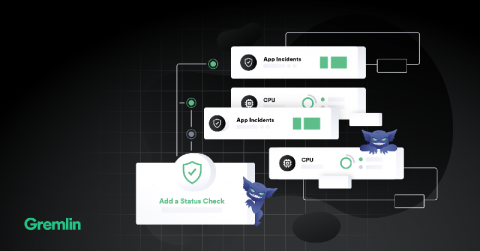
One of the most important aspects of any Chaos Engineering program is knowing that every experiment is being run safely. And one of the simplest ways to ensure safe experiments is by having safeguards that prevent running chaos experiments on a system that is unhealthy or has an incident in progress. Today, Gremlin is excited to announce Status Checks, which run before you kick off a Chaos Engineering Scenario in order to verify your system is in a steady state.

Three Ways Federal Agencies Can Manage and Secure Their Hybrid Data Centers

As hybrid environments become more popular, federal IT teams are faced with managing and securing their on-premises and cloud infrastructures, while minimizing costs—and there’s no single tool or approach that can solve all these problems. With this in mind, let’s look at three ways federal agencies can address these challenges by adopting new mindsets, tools, and best practices.

DNS Monitoring 101: Verify DNS Mapping

This Tip of the Day is the first in a three-part series on Domain Name System (DNS) monitoring. The Domain Name System is often described as “the phonebook of the Internet.” While humans access the Internet via domain names such as npr.org or bbc.com, web browsers interact via Internet Protocol (IP) addresses. DNS translates domain names to IP addresses so that browsers know which Internet resources to load.