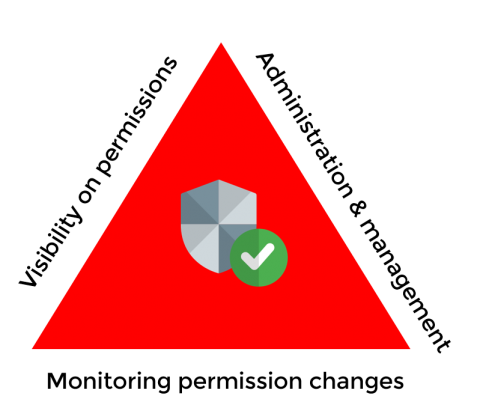
In the previous blog in this series, we discussed authentication and authorization mechanisms, and how configuring them properly can help secure your databases. In this blog, we’ll talk about how data breaches can be prevented by implementing the principle of least privilege (POLP). According to Verizon’s 2019 Data Breach Investigations Report, insiders account for 76 percent of all compromised database records.
In part one of this two-part blog series, we discussed seven reasons security configurations are an important part of an organization’s security posture. In this part, we’ll look at eight security configurations that can help with ensuring comprehensive control over the endpoints, avoiding vulnerabilities, deploying security configurations, and automating a number of verticals of endpoint security.
Five worthy reads is a regular column on five noteworthy items we’ve discovered while researching trending and timeless topics. This week, we’ll take an in-depth look at multiexperience which came in second on the list of Gartner’s top 10 strategic technology trends for 2020 and it’s importance in an organization’s digital transformation.
Redis, which stands for Remote Dictionary Server, is an open source, in-memory data structure store that’s used as a database, memory cache, and message broker. It stores data entirely in memory in the form of key-value pairs. This gives it an edge over all other databases, as it eliminates the need to access data from the disk. It also makes Redis one of the fastest NoSQL databases, where data is accessed in microseconds because there are no seek time delays.
Security configurations are security-specific settings used to secure heterogeneous endpoints such as servers, desktops, laptops, mobile devices, and tablets. As endpoints in your network diversify, securing each endpoint becomes a challenge. One way to ensure effective endpoint security is by automating it, which is where security configurations come into play. Security configurations are utilized to secure and control every facet of your network.
Working from home has become our new normal, with many of our jobs being performed remotely. The experience of working remotely can be as seamless as it was from our workplace, with all the technological advancements available today. Businesses have also put network security on the forefront by implementing use of virtual private networks (VPNs). This enables users to securely access confidential information hosted on the organizations’ servers.
From global pioneers to budding startups, almost every organization around the globe has adopted a mandatory work-from-home routine due to the COVID-19 outbreak. This shift has brought up numerous questions for decision-makers: How are we going to pull this off? Is work-from-home strategy feasible? Is our network security going to be compromised? Is BYOD the solution?