Complex hybrid IT setups are leading us to rethink how we structure our IT departments. Let’s discuss ITOps and CloudOps in 2025. Could making them a single team be more effective?
Do you remember Back to the Future Day? The day in 2015 when the world celebrated Marty McFly’s trip to a futuristic 2015 in the iconic movie? We laughed at the idea of hoverboards and self-tying shoes while marveling at how much of what was once science fiction was becoming real. Here’s the thing, though: the future never announces its arrival with a neon sign or a ringing bell. It just happens.
Picture this: Your marketing team just launched a major campaign, driving thousands of visitors to your website. The CEO is eagerly watching sales metrics, and your IT team has spent weeks optimizing the infrastructure. Then it happens — your website slows to a crawl. Cart abandonment spikes. Social media lights up with frustrated customers. And just like that, your big moment transforms into a costly nightmare. Sound familiar? You’re not alone.
Rust’s strong memory safety and efficient code execution make it a top choice for building robust, high-performance systems. But even with its powerful guarantees around memory management and thread safety, Rust applications in production environments can still face challenges such as latency spikes, resource contention, and unexpected bottlenecks. For this reason, monitoring Rust applications is essential to ensure they meet performance expectations and remain reliable under load.
DX Unified Infrastructure Management (DX UIM) from Broadcom is a cornerstone enterprise solution that can be employed for precise and powerful infrastructure monitoring. For many enterprises, DX UIM is central to their overall observability strategy. Over the years, ongoing enhancements to DX UIM have supported continual changes in modern enterprise environments and cemented the solution’s strong position as the single source of truth for all aspects of infrastructure monitoring.
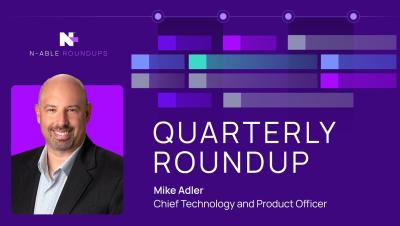
Join N-able Chief Technical Office and Chief Product Officer, Mike Adler, as he shares the latest product updates for N-sight RMM. Highlights include the brand new Asset Views, Take Control multi-monitor-support, and a preview of what we’ll deliver in Q1 2025.
Hear from Mike Adler, Chief Technical Office and Chief Product Officer at N-able, for the newest updates for N-central RMM. Some highlights include an enhanced security with audit logs for SIEM integration, AI driven developer portal in preview, and a host of new functionality to help techs be more efficient and streamline device deployment and stability. Additionally we have added new integrations with Cork, ScalePad, immy.bot, and vCIO ToolBox.
Join Stefan Voss, Chief Product Office for Cove, as he details this quarter’s enhancements for Cove Data Protection and gives you a sneak peek as to what’s in store in 2025. He’ll cover standby image rollback, and all the improved Microsoft 365 offboarding features we rolled out over the last few months.
This podcast features Cory O'Daniel, CEO of Massdriver, an infrastructure automation platform. O'Daniel discusses his extensive background in software engineering and cloud operations, highlighting his expertise in Erlang and Elixir programming languages and their applications within Kubernetes. He explains Massdriver's role in simplifying infrastructure management for both developers and operations engineers by visually representing infrastructure-as-code.
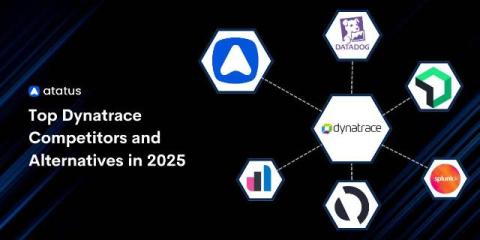
Observability tools are crucial for maintaining the seamless performance and reliability of systems. Dynatrace has been one of the leading solutions for monitoring and observability over the past few years. However, there are many alternatives that provide similar features, often at more accessible price points and with unique capabilities. In this article, we will explore the best Dynatrace alternatives for 2025 to help you find the right fit for your organization.