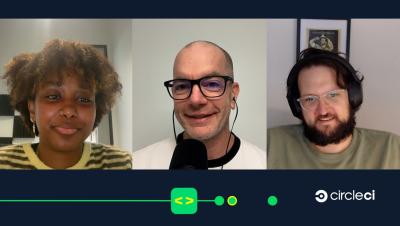
This video guides you through the steps to migrate your network monitoring from SolarWinds to WhatsUp Gold, emphasizing key differences, benefits, and best practices to ensure a smooth transition.
Cloud environments generate high volumes of security signals every day. With each one, you have to determine if it’s benign, a clear false positive, or something worth investigating. The challenge is needing to make these calls continuously, often without knowing whether any single event is part of a larger attack. Spending too much time investigating benign activity reduces the ability to detect threats elsewhere, and missing a legitimate threat has clear consequences.
The 2025 State of Containers and Serverless report found that 64% of organizations use the Kubernetes Horizontal Pod Autoscaler (HPA) to manage Kubernetes workload capacity. But only 20% of those deployments scale on custom metrics. The other four-fifths of organizations rely on resource metrics—CPU and memory utilized by their pods—to trigger autoscaling activity.
For the first time in a decade, humans are the minority on the open web. In 2025, automated traffic officially crossed the Rubicon to account for 51% of all web activity, while generative AI-driven referrals to retail sites surged by a staggering 693% year-over-year. As we move through 2026, these are no longer just "bot" statistics to be handled by a WAF. They represent a fundamental shift in user behavior. The fastest-growing segment of your audience is now agentic.
Your AI coding assistant already knows your codebase. Now it can know your production environment too. AppSignal's MCP server gives AI agents and AI code editors direct access to your monitoring data — errors, performance metrics, and more — so they can help you debug, investigate and resolve issues without switching context. And with our new public endpoint, getting started is simpler than ever.
Best enterprise asset management software is becoming essential for organizations that manage large-scale operations, multiple facilities, and diverse asset categories. Enterprises today rely on advanced systems to monitor physical assets, digital assets, infrastructure, and operational equipment across departments and locations.
Summary: A test hook connects a test or lint command to an event in your AI coding agent’s workflow. When the event fires, the agent runs the command automatically. If it fails, the agent’s action is blocked. You can wire your existing test commands into your agent’s lifecycle hooks to get deterministic local validation before code ever reaches CI. AI coding agents write code at a pace where stopping to manually run tests breaks your flow.
TL;DR: Autonomous IT platforms combine observability data and AI to automatically detect, diagnose, and resolve issues—shifting operations from reactive monitoring to predictive, self-healing systems.
On December 8th, 2025, IBM announced a definitive agreement to acquire Confluent in a deal valued at $11 billion. It is a massive moment for our industry. The acquisition was finalized on March 17th, 2026. For some, this looks like a safe bet; a way for enterprise giants to finally "get" real-time data. But for those of us who have spent our careers in open source software and data infrastructure, it feels different. There’s a sense of wondering “when is the other shoe going to drop?”.
Outages in distributed systems are inevitable, making resilience testing essential in the SDLC. It must be continuous, covering failures, load, and disasters. Delayed validation creates “resilience debt,” increasing risk. A holistic approach—combining chaos, load, and DR testing—plus cross-team collaboration and AI-driven insights improves reliability and reduces impact. Modern software delivery has dramatically accelerated.