Three Ways Catchpoint Monitors the Edge
Edge computing – with its ability to help unleash the potential of smart cities and autonomous vehicles, is something often thought to exist “around the corner” as opposed to an industry already in motion.


Edge computing – with its ability to help unleash the potential of smart cities and autonomous vehicles, is something often thought to exist “around the corner” as opposed to an industry already in motion.
The Ghost blogging platform offers a lean and minimalist experience. And that's why we love it. But unfortunately sometimes, it can be too lean for our requirements. Web performance has become more important and relevant than ever, especially since Google started including it as a parameter in its SEO rankings. We make sure to optimize our websites as much as possible, offering the best possible user experience.
The Stack Infra team at Elastic uses many services to provide downloads for projects like Elasticsearch and Kibana to our users. One of these services is Fastly, which helps us optimize delivery to regions around the world. Keeping an eye on the performance and behavior of our CDN is important to ensure we're operating at the level we expect.
A Content Delivery Network (CDN) is a collection of distributed nodes, called edge servers, connected to the same origin servers and placed local to the users’ location. If you are using a CDN, your website content is delivered to the user from the nearest edge server to their location. Without a CDN, you are putting stress on the origin server every time a user requests something.
A Content Delivery Network, or CDN, is a collection of proxy servers that are connected to the same origin server, and are geographically distributed relative to end users. Instead of utilizing a single server to respond to user requests, CDN edge servers are able to deliver content more effectively and efficiently to users based on their physical location. For example, if someone from Europe accesses your U.S.-hosted website, it would likely be done through a local U.K.
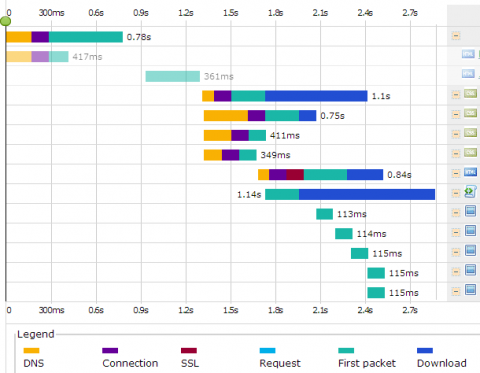
When was the last time you looked into the loading time of your website on actual end user screens? Do you know that the load time of your website content may significantly vary from different geographical locations? An end user sitting in Los Angeles may face a delay in downloading your web page and content than a user accessing your web page from London. The simple fact is lots of back-end processes are happening behind the scene to deliver your website and content to the end uses.
In case you haven’t heard, Uptrends has a new, exciting free tool, CDN Performance Check. The new tool makes checking on your CDN performance super easy. Plug in a URL for your site or one of your static resources and watch as Uptrends times the connection and download from over 40 worldwide locations. It’s one quick test, but you get so much CDN performance information back. All you need is your site’s URL or the URL for one of your static page elements served up by a CDN.