The latest News and Information on Observabilty for complex systems and related technologies.
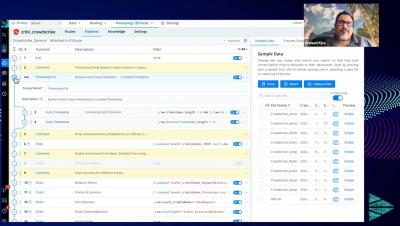
In my last blog post, I talked about the cadence of product planning and delivery at Honeycomb. Tucked away in there was a mention of “demo day”—and I’m back to tell you all about that because it’s a pretty big deal around here, and I want to encourage you to give it a try as a way to see progress on new feature development and get folks excited about what’s on the horizon.
Enterprises are dealing with a deluge of observability data for both IT and security. Worldwide, data is increasing at a 23% CAGR, per IDC. In 5 years, organizations will be dealing with nearly three times the amount of data they have today. There is a fundamental tension between enterprise budgets, growing significantly less than 23% a year, and the staggering growth of data.
As businesses accelerate digital transformations and cloud adoption to better serve customers and employees in the face of the global pandemic, operational complexity has also mounted. To untangle these complexities and enable executive visibility into IT ecosystem , business leaders are increasingly looking to observability solutions as a strategic investment.
Yes! While data is data (and tools exist on a continuum, and can and often are reused or repurposed to answer questions outside their natural domain), observability and BI/data warehouses typically exist on opposite ends of the spectrum in terms of time, speed, and accuracy, among others.
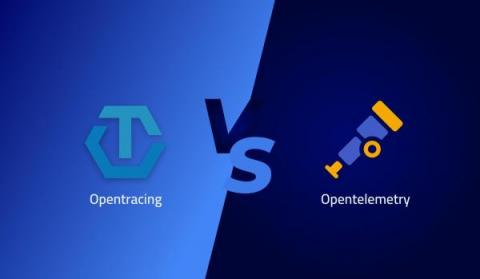
Before we talk about OpenTelemetry, we should talk about telemetry. Telemetry is: And an instrument is: For the purpose of measuring running computer software and systems, our instruments are virtual instruments. That is to say, code that measures other code. It sounds simple: read a measurement and send it to a remote location. In practice, to make that telemetry data useful in today’s cloud-native and ever more complex environments, there are huge logistical and technical hurdles to overcome.