Operations | Monitoring | ITSM | DevOps | Cloud

Tutorial: Getting Started with ROS

ROS, the Robot Operating System, is the platform of choice for robot development. However, the breadth and depth of existing documentation can be daunting for the ROS beginner. Where should you start learning about ROS 2 on Ubuntu? All robots based on ROS and ROS 2 are programmed using five simple but core constructs: In this tutorial and associated video we’ll introduce these concepts with simulated robots.

From VMware to Charmed Openstack

Over the last decade, organisations have started virtualising their IT workloads and migrating from legacy monolithic infrastructure to cloud environments. Many choose VMware as a provider for their virtualised infrastructure. However, because of the costs associated with VMware licencing, support and professional services, many are not able to meet their primary goal - significantly reduced TCO. In search of alternative solutions, organisations have recently started exploring other platforms such as OpenStack.

Set up the AdGuard Home Ubuntu Appliance

Block ads and trackers, and regain full control of your network. The AdGuard Home Ubuntu Appliance is an easy way for anyone to shield their WiFi network, and all the devices in their home from hackers and prying eyes online. In this post, we discuss what AdGuard Home is, some of the benefits and features of using the appliance, and how you can get started.

MicroK8s HA

MicroK8s is Canonical’s lightweight Kubernetes, that allows for Kubernetes to be installed on any machine in under 60 seconds. Initially, microK8s was a single K8s cluster project, however as users grew to love this easy-to-deploy distribution, Canonical now enables them to create small K8s clusters for higher scalability. Watch this video to witness yourself how easily you can run a command, create your K8s cluster, and run it in an instance using microK8s.

Hybrid Cloud Kubernetes: Connecting the dots with Azure Arc-enabled Kubernetes

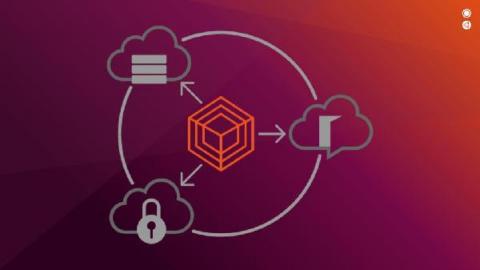
Canonical has recently teamed up with Microsoft, to enable Kubernetes users to manage multiple K8s clusters from a single platform - Azure Arc. Even if you’re not a Microsoft user, you can attach any on-prem or public cloud Kubernetes cluster to Arc, and manage them from a centralised point. In this demo, watch how to administrate multiple and different K8s clusters with Canonical’s distributions of Kubernetes and Arc.

Optimised authentication methods for Ubuntu Desktop

Still counting on passwords to protect your workstation? When set up properly, alternatives to passwords provide a streamlined user experience while significantly improving security. These alternative authentication methods can also easily be combined to create a custom and adaptive authentication profile.

Kubernetes 1.19 release candidate available for testing

The Kubernetes 1.19 release candidate is now available for download and experimentation ahead of general availability later this month. You can try it now with MicroK8s. To get the latest Kubernetes on your machine, install MicroK8s and get a lightweight, zero-ops K8s cluster in no time: Or install from https://snapcraft.io/microk8s and select 1.19/candidate You can install MicroK8s on Ubuntu and all major Linux distributions or on Windows and macOS using native installers.

The State of Robotics - July 2020

We know a lot of you are on vacation so we’ll keep this month’s State of Robotics edition short and sweet. Looking for an easy way to get familiar with ROS 2? We recently published a few helpers on how to simulate robots with turtlesim to help our readers get a rolling start on ROS2. For something that carries a little more punch, follow our tutorial on simulating a TurtleBot3.

How to monitor etcd

Learning how to monitor etcd is of vital importance when running Kubernetes in production. Monitoring etcd will let you validate that the service performs as expected, while detecting and troubleshooting issues that could take your entire infrastructure down. Keep reading to learn how you can collect the most important metrics from etcd and use them to monitor this service. etcd is a foundational component of the Kubernetes control plane.