Operations | Monitoring | ITSM | DevOps | Cloud

How Honeycomb Supercharges OpenTelemetry for AI

It has become common knowledge that the nature of software development has changed as AI-code generation and agent-based features gain adoption. In perhaps a more subtle shift, the fundamentals of software instrumentation are changing too. As OpenTelemetry becomes the standard instrumentation layer across enterprises, with thousands of developers (many from Honeycomb) actively contributing to it, the nature of the telemetry data captured itself is evolving to meet the growing demand for rich context.

Observability trends for 2026 (Part 2): GenAI and OpenTelemetry reshape the landscape

Over the course of my 20 years as a developer, SRE, and now observability product leader, software has typically progressed at a good pace. But now, the emergence of two transformative technologies are fundamentally reshaping enterprise observability: generative AI (GenAI) and OpenTelemetry (OTel). We surveyed over 500 IT decision-makers for a new report:The Landscape of Observability in 2026: Balancing Cost and Innovation.

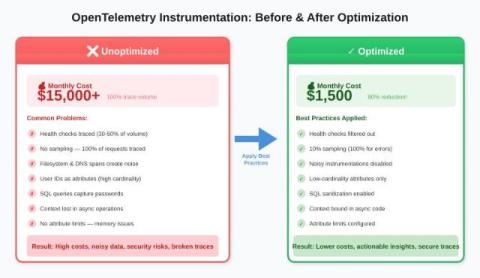
OpenTelemetry Instrumentation Best Practices for Microservices Observability

OpenTelemetry instrumentation is the foundation of modern microservices observability, but getting it right in production requires more than just enabling auto-instrumentation. This guide covers production-tested OpenTelemetry best practices that help engineering teams achieve reliable distributed tracing, control observability costs, and extract maximum value from their telemetry data.

How to Implement Distributed Tracing in Microservices with OpenTelemetry Auto-Instrumentation

This guide shows you how to implement OpenTelemetry’s auto-instrumentation for complete distributed tracing across your microservices, from initial setup through production optimization and troubleshooting.

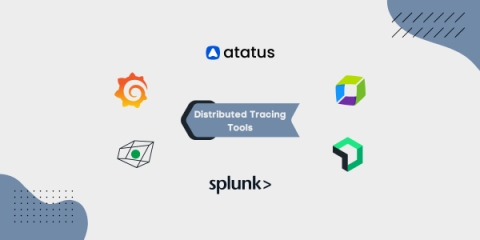
Top 12 Distributed Tracing Tools in 2026: Complete Comparison & Reviews

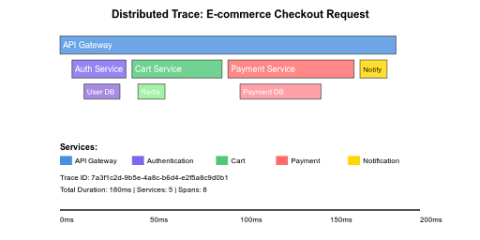
Distributed tracing has become essential for modern software teams. As applications evolve into complex distributed systems with microservices, APIs, databases, and third-party integrations, understanding how a single user request travels through your entire stack is no longer optional, it’s critical for maintaining performance, reliability, and user satisfaction.

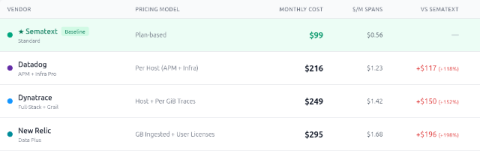
Top Distributed Tracing Tools in 2025: Updated Market Review with Cost Comparison

The distributed tracing landscape has evolved from “observability add-on” to core production infrastructure. In 2026, distributed tracing is no longer optional for engineering teams operating microservices, Kubernetes, or AI-driven workloads. It is now tightly coupled with incident response, cost optimization, and AI-assisted debugging.

OpenTelemetry and Grafana Labs: What's new and what's next in 2026

For many teams, 2024 was the year of asking, “can OpenTelemetry do this?” In 2025, the community answered with a resounding “yes,” moving beyond experimentation to focus on what matters most in practice: stability, ease of use, and cross-project compatibility. That momentum now sets the stage for what’s to come for OpenTelemetry in 2026.

OpAMP Explained: Why OpenTelemetry Needed an Agent Management Protocol (and How We Use It)

OpenTelemetry makes it easy to produce and transmit any type of telemetry. In production environments, this often means deploying the OpenTelemetry Collector as an intermediary to process, enrich, and route telemetry data. As systems scale, so does this infrastructure—sometimes to hundreds or thousands of Collectors spread across environments.

OpenTelemetry Overview: Unifying Traces, Metrics, and Logs

The IT landscape has evolved rapidly, transitioning from monolithic applications to complex, distributed system architectures comprising microservices that run on platforms like Kubernetes. With this added complexity, simply checking if a server is running is no longer sufficient. As IT professionals, we need insight into what’s really happening inside these systems. That’s where observability comes in.

Applying Feature Flag Context To Your OpenTelemetry Spans | Harness Blog

Integrating feature flag context into OpenTelemetry traces enhances observability by recording flag states as span attributes, making it easier to analyze how specific flags influence application behavior. When you toggle a feature flag, you're changing the behavior of your application; sometimes, in subtle ways that are hard to detect through logs or metrics alone. By adding feature flag attributes directly to spans, you can make these changes observable at the trace level.