Operations | Monitoring | ITSM | DevOps | Cloud

Create Kafka Topics in 3 Easy Steps

Creating a topic in production is an operative task that requires awareness and preparation. In this tutorial, we’ll explain all the parameters to consider when creating a new topic in production. Setting the partition count and replication factor is required when creating a new Topic and the following choices affect the performance and reliability of your system.

Coralogix teams up with AWS Marketplace for Log Management

AWS offers a plethora of log and metric data but in order to extract meaningful insights and react to production issues on a dime, a centralized logging solution is critical. Today we’re excited to announce the availability of Coralogix on the AWS Marketplace for the first time. You can now get our advanced machine learning log insights directly in your AWS cloud account for full-stack log aggregation, convenient billing, tighter security with your AWS infrastructure, and faster deployment.

Elasticsearch Mapping Exceptions - The complete guide

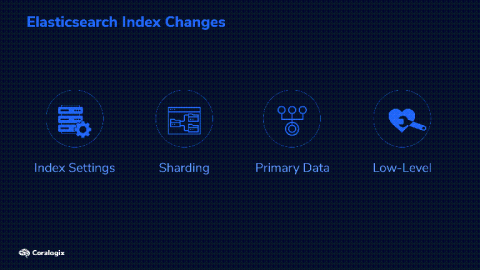
As Elasticsearch is gradually becoming the standard for textual data indexing (specifically log data) more companies struggle to scale their ELK stack. We decided to pick up the glove and create a series of posts to help you tackle the most common Elasticsearch performance and functional issues. This post will help you in understanding and solving one of the most frustrating Elasticsearch issues – Mapping exceptions.

Test Automation Tools to Accelerate CI/CD

So much of our world has moved away from the slow and methodical, towards the agile and iterative. In transport, for example, everything is “on demand”, constantly changing and adaptable. The same is true for developers. With movements and philosophies such as CI/CD, everything is about moving quickly, yet smartly. Test automation is an integral part of this development philosophy.

EKS vs. KOPS

In the past, applications would be deployed by installation on a host, using the operating system package manager. This was a heavy solution with tremendous reliance on the operating system package manager and increased complexity with libraries, configuration, executables and so on all interconnected. Then came containers. Containers are small and fast, and are isolated from each other and from the host.

Splunk vs SumoLogic vs ELK

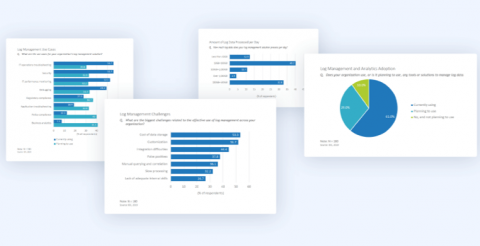
From production monitoring to security concerns, it’s critical for businesses to analyze and review their log data. This is particularly true for large and enterprise companies, where the sheer amount of data makes log analysis the most efficient way to track key indicators. CTOs, in particular, are dealing with the challenges of this massive amount of data flowing through their organization, including how to harness it, gather insights from it, and secure it.

Terraform vs Helm Charts

With the increasing adoption of containerization, the need arose to manage, schedule and control clusters of containers, and that’s where Kubernetes comes in. Kubernetes is an open-source system for automating deployment, scaling, and management of containerized applications, generally being Docker containers. When interfacing with Kubernetes, 2 competing tools are often discussed: Terraform, and Helm.