Operations | Monitoring | ITSM | DevOps | Cloud

The Importance of API Monitoring in Maintaining Service Reliability

Why do services need API monitoring? Application programming interfaces (APIs) have become indispensable for digital business. Forbes found that 98% of developers consider APIs to be crucial to getting their work done, and 86% of developers expected their use of APIs to increase. A survey by McKinsey found that 88% of banking companies believe APIs are increasing in importance; 81% think APIs are a priority for business and IT.
What is Synthetic Monitoring?

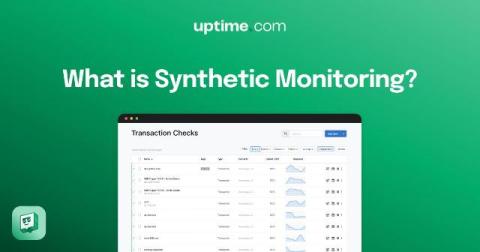
Synthetic monitoring (SM) uses script-based, simulated user interactions to assess the performance and reliability of websites, application program interfaces (APIs), and other digital services. These scripts can mimic typical user behaviors, such as logging in, completing a purchase, site navigation, etc., and run consistently from multiple locations so you get real-time feedback on how your systems handle different scenarios.

What is a Status Page and Why Every Website Needs One

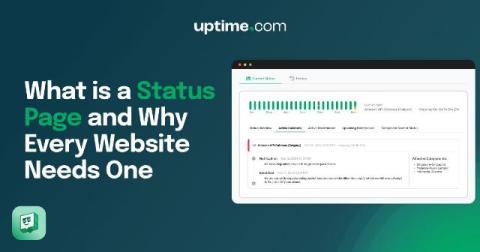
Imagine if every time your website had the hiccups, your customers started dialing support faster than you can say “downtime.” In the modern digital age, where patience is thinner than a smartphone and attention spans are shorter than a tweet, keeping your users informed is not just polite — it’s essential. So, what exactly is a status page? Think of it as your company’s health monitor, but without the awkward blood pressure cuff.

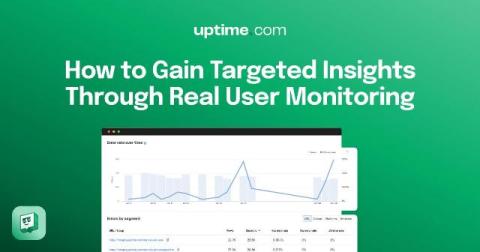
How to Gain Targeted Insights through Real User Monitoring (RUM)

Uptime.com offers Real User Monitoring (RUM) as part of every subscription plan. RUM reporting provides a variety of insights into how users experience your website, packaged in a single report that offers an intuitive snapshot of user experiences. While Uptime.com can provide metrics and monitoring of performance, RUM enables real-time monitoring, collecting metrics that show how users interact with your site and how satisfied they are with its speed and stability.

How Implementing Load Balancing Optimizes Service Performance

Considering implementing load balancing? Slow websites and website downtime are more than just nuisances. One study found that slow-loading websites cost online retailers more than $77 billion each year in lost sales. Over half of consumers cite a slow webpage as the main reason for abandoning an online purchase, and just under half will not return to a website after a bad experience.

The Difference Between SLA, SLO, and SLI Service Quality Metrics

SLA vs SLO vs SLI, what’s the difference anyway? Workplace success relies on clear expectations to help leaders and employees thrive together. As such, the partnership between customer and provider requires the same clarity to maintain service satisfaction. This is why Service Level Agreements (SLAs), Service Level Objectives (SLOs), and Service Level Indicators (SLIs) exist in the first place.

Why You Need a Multi-Region Deployment Strategy for Availability

Availability and reliability are crucial for modern software applications and digital services. Meeting service requirements and avoiding downtimes promote customer satisfaction, trust, and credibility. A multi-region deployment strategy can help. Systems that are not reliable or available when needed can cause lost revenue and business, unplanned maintenance, and decreased productivity. Companies can lose up to $9,000 per minute during service downtime.

Does Page Speed Affect SEO & 5 Other Questions You Have About Ranking Factors

Things can get complicated when it comes to keeping up with Google’s revolving door of ranking factors. First, there’s the matter of determining what actually impacts SEO—like high-quality content—and what’s just speculation—like domain age. Unfortunately, Google has never released an official list of the 200 suspected SEO ranking factors, but there is empirical evidence to guide us.

Want a Fast-Loading Website? Here's How to Make It Happen

In 2021, Vodafone launched a strategy to improve its sales through landing page A/B testing. Both pages looked and functioned identically, but one was optimized for page speed. The optimized page, which had a 31% better Largest Contentful Paint (LCP) than the other, scored 8% higher in sales. These results echoed findings by Propellernet the previous year. They discovered that mobile sites with faster-than-average total load times were 34% more likely to convert.

Case Study: McKenzie Intelligence Services

McKenzie Intelligence Services (MIS) is a company specializing in damage assessment post-disasters. Their platform, the Global Events Observer (GEO), offers comprehensive coverage of natural and manmade disasters worldwide, such as hurricanes, floods, civil unrest, and rioting. MIS provides an expert-assessed view of the world through analysts who analyze various imagery sources, including satellite and street-level imagery.