Operations | Monitoring | ITSM | DevOps | Cloud

Detect security threats with anomaly detection rules

Securing your environment requires being able to quickly detect abnormal activity that could represent a threat. But today’s modern cloud infrastructure is large, complex, and can generate vast volumes of logs. This makes it difficult to determine what activity is normal and harder to identify anomalous behavior. Now, in addition to threshold and new term –based Threat Detection Rules , Datadog Security Monitoring provides the ability to create anomaly.

Monitor and visualize database performance with Datadog Database Monitoring

When you’re running databases at scale, finding performance bottlenecks can often feel like looking for a needle in a haystack. In any troubleshooting scenario, you need to know the exact state of your database at the onset of an issue, as well as its behavior leading up to it.

Highlights from Black Hat USA 2021

Black Hat USA is one of the industry’s oldest and most well-established security events. Last year, the conference was held virtually for the first time in its history. This year’s conference brought together the best of both worlds, with a hybrid event that was held virtually and in person in Las Vegas. Historically, Black Hat has seen about 20,000 attendees at its in-person conference.

Monitor your entire serverless stack in the Serverless view

Serverless event-driven architectures are composed of AWS Lambda functions that regularly interact with databases, APIs, message queues, and other resources to facilitate complex workflows and functionalities. It is therefore crucial to monitor every component of your stack to ensure your applications perform optimally at scale. But traditionally, telemetry data for AWS resources has lived in silos, making it difficult to quickly get the context you need to debug issues.

How to monitor containerized and service-meshed network communication with Datadog NPM

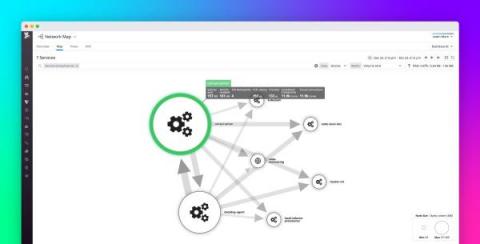
Containers are lightweight, portable, easily scalable, and enable you to run multiple workloads on the same host efficiently, particularly when using an orchestration platform like Kubernetes or Amazon ECS. But containers also introduce monitoring challenges. Containerized environments may comprise vast webs of distributed endpoints and dependencies that rely on complex network communication.

EFS Monitoring with Datadog

In Part 1 of this series, we looked at the key EFS metrics you should monitor, and in Part 2 we showed you how you can use tools from AWS and Linux to collect and alert on EFS metrics and logs. Monitoring EFS in isolation, however, can lead to visibility gaps as you try to understand the full context of your application’s health and performance.

Secure your infrastructure in real time with Datadog Cloud Workload Security

From containerized workloads to microservice architectures, developers are rapidly adopting new technology to scale their products at unprecedented rates. To manage these complex deployments, many teams are increasingly moving their applications to third party–managed services and infrastructure, trading full-stack visibility for simplified operations.