Operations | Monitoring | ITSM | DevOps | Cloud

The OpsRamp Monitor: Covid-19 May Further IT Modernization

Most IT professionals are working from home, enduring all the new challenges for productivity under a heavier workload. Some IT pros are working in companies where revenue forecasts are grim. But it’s time to put the gloom and doom aside for a moment. As my mother told me when our first-born was keeping us up all night: everything is temporary. While we’re in this unnerving phase of life and work, let’s take a look today at the positives and that begins with IT budgets.

Closer Look: Observability

As enterprise IT systems have become more complex and distributed due to cloud infrastructure, containers, serverless technology, an ever-growing footprint of applications and devices, IoT, SDN, open source development tools and more, the practice of performance monitoring has become far more nuanced. In these modern IT environments, traditional monitoring practices centered on known issues aren’t enough.

Complexity Debt: The Hidden Wrench In Enterprise Modernization

There is a dark side to digital transformation, but nobody wants to talk about it. I previously wrote about technical debt. But there’s also complexity debt. When a CIO decides to delay modernizing or upgrading systems, there are usually budget considerations and skills gaps that stand in the way. The IT leader’s job is one of continual evaluation of risk and opportunity amid rapid technology disruption.

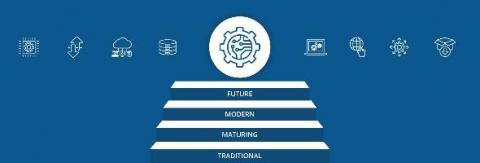
Advancing IT Operations Maturity for Digital Transformation

This is part two in our blog series on Digital Transformation during Covid-19. You can read the first blog here. The global pandemic and subsequent lockdowns affecting over half the world’s population are already affecting digital transformation, on both an organizational and employee level. Starting by improving your internal customer experience is a good first step, after which digital transformation efforts can and should focus on enhancing the external customer experience in every way.

Staying Focused on Digital Transformation During Covid-19

CIOs and other IT leaders know the importance of having a well-oiled machine to support the vast requirements of the business. Not having a Google-like experience of an always-up, always-fast, easy to use technology ecosystem can be a competitive disadvantage. More pressing is that while most businesses want to reinvent, through digital transformation or other methods, these large-scale efforts fail 70% of the time.

An IT Operations Exec Discusses DevOps Collaboration, AIOps Trends

Donnie Berkholz is a VP of IT Service Delivery and comments frequently on trends in IT infrastructure in his newsletter. We talked to Donnie about his typical day on the job, his initiatives in self-service platforms and product management and his take on top infrastructure management trends such as AIOps and Kubernetes.

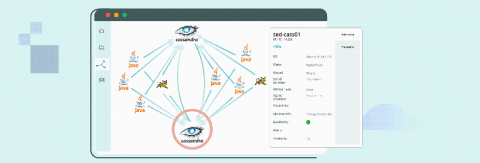
Topology Maps: Connecting the Dots for Hybrid and Multi-Cloud Infrastructure

In this article, learn: Given that enterprises use a mix of physical, virtual, and cloud native infrastructure, it can be a struggle to maintain the availability and performance of digital services. OpsRamp's Topology Explorer delivers visual representations of dependency relationships between application components and hybrid infrastructure that feed into both service maps and service-centric AIOps.

The 7-Step plan for successful AIOps implementations

The idea of applying artificial intelligence and machine learning to more rapidly and accurately resolve IT incidents and manage alerts has been gaining steam in the past year. While AIOps, as it’s frequently called, has spawned an entirely new market of startups, many enterprise IT leaders are playing a cautious hand so far – and for good reason. There are risks, though. If an AIOps tool goes wrong out of the gates, IT and executive trust diminishes.

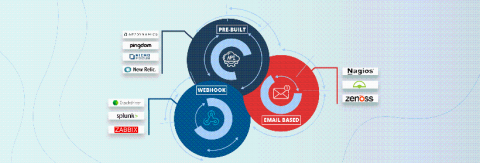
Alert Integrations: Right Person, Right Message, Right Time

DEJ's The Roadmap to Becoming a Top Performing Organization in Managing IT Operations report found that 40% of IT teams use more than 10 monitoring tools to ensure the right levels of operational visibility and control. Given the diversity of tools used by enterprises, the only way to ensure collaborative unified incident management is to use a modern AIOps platform with native infrastructure discovery and monitoring instrumentation.

Closer Look: Intelligent Infrastructure Monitoring

In this article: Infrastructure monitoring systems have been undergoing massive change in the past few years. Before the proliferation of cloud computing, IoT and edge computing, mobile apps and SaaS apps, the practice was fairly static, albeit traditionally quite siloed. IT managers needed to get data on a set of standard metrics, from a handful of tools.