Operations | Monitoring | ITSM | DevOps | Cloud

Solving the ITOM Integrations Problem

There’s no getting around the prevalence of heterogeneous tools in IT operations and DevOps. Teams have built up ecosystems of tools over time for different infrastructure, workflows and applications – and while some of them are outdated or duplicitous – plenty still serve a useful purpose in the enterprise. Yet unfortunately tool sprawl adds to the complexity of monitoring a hybrid or multi-cloud environment.
An IT Exec Charts a New Path Amid New Realities

If you’re the chief IT executive of a Fortune 500 company right now, all eyes are on you. You need to be the hero, the light in the gloom, the one to deliver your company from the brink of economic disaster in a year like no other. If you’re Rob Carter, Executive VP of Information Services at FedEx, you’ve been working toward this moment for years. Carter was the keynote speaker at the Enterprise IT Virtual Event on July 23, hosted by Data Center Knowledge.

The Real Savings from Intelligent Alert Management

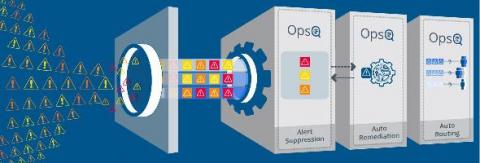
Alert noise is reaching an all-time high in IT organizations. The volume of these alerts from disparate tools and technologies has reached a point where they are greatly undermining the ability of IT organizations to properly manage, secure and optimize services and applications for users and customers. DEJ’s recent study on AIOps found that organizations currently spend $1.27 million annually on avoidable incident escalations that result from non-contextual and non-actionable alerts.

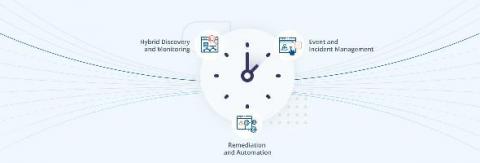
How to Assess Your IT Operations Discovery to Resolution Pipeline

The 2020 State of the Cloud Report finds that 60% of enterprises will increase their cloud infrastructure usage due to Covid-19. Hybrid infrastructure adoption creates new management challenges for IT operations teams which are further exacerbated by shrinking technology budgets and staff skill shortages. Gartner predicts that 40% of IT operations teams will deploy AI-augmented automation by 2023 to keep up with customer expectations and changing business models.

How to Run a Successful Remote SaaS Operations Team

This article was originally published in New Stack. More and more companies have gone remote with surprising benefits — a trend that has been building for years. A survey by Global Workplace Analytics and FlexJobs indicates that remote work has grown 91% over the last 10 years, and 159% over the last 15 years. The COVID-19 pandemic has elevated the relevance of remote work (including remote IT operations) to a new level.

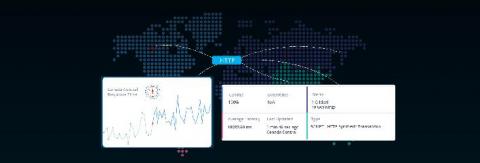
Improve Website Performance and Availability with Synthetic Monitoring

Enterprise monitoring tools have traditionally paid attention to the performance of monolithic applications hosted on physical and virtual infrastructure resources. The adoption of cloud native and microservices architectures has brought greater focus to end-user experiences delivered by web applications across different global locations. The bar for a great digital customer experience has never been higher.

OpsRamp Summer 2020 Release Improves Digital Customer Experiences

To little surprise, online spending in the U.S. has grown 40% since the onset of quarantines in March. A similar trend has played out in other countries: in the UK, online retail spending reached a record high of 30% of total sales in April, according to the Office of National Statistics. If there was ever a solid reason to invest in technologies and people to improve customer experiences (both online and offline) it’s Covid-19.

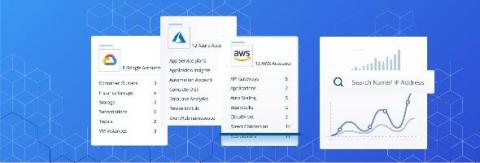
Multi-Cloud Monitoring with OpsRamp

In the first quarter of 2020, enterprises spent $29 billion on public cloud infrastructure, an increase of 37% over the previous year. While the global economy was battered by the coronavirus pandemic, organizations still rushed to accelerate digital transformation and ensure business continuity with hyperscale infrastructure.

The OpsRamp Monitor: Outage lessons, GCP advantages, IT careers

For IT professionals, an enduring outage is one of the worst things that can happen. There goes your credibility, and here comes the executive team enraged and impatient. Now of course, given the distributed, multi-sourced nature of IT infrastructure, some outages are simply not preventable. The details are still emerging from the June 9th outage on IBM Cloud. ITPro Today interviewed Forrester analyst Dave Bartoletti for some mitigation advice.