Operations | Monitoring | ITSM | DevOps | Cloud

How to Size a 10ms UPS for Essential Devices?

Sizing a 10ms UPS starts with a simple goal: keep your essential devices running without overloads, shutdowns, or wasted battery capacity. A fast switchover matters for electronics that cannot tolerate noticeable interruption, including routers, desktop computers, modems, security gear, and some home office equipment. To choose the right unit, first total the running wattage of the devices you want to protect, then account for any startup surge, especially from motor-driven loads. Next, match that demand to UPS output capacity, leaving sensible headroom so the system runs efficiently and handles short spikes.
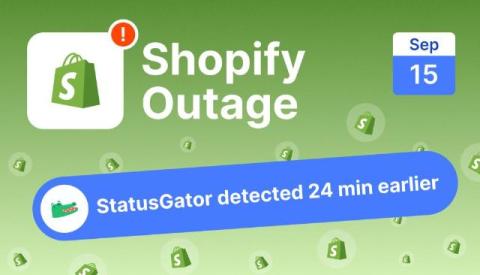
Shopify admin outage on September 15, 2026: merchants locked out, and how StatusGator caught it early

Shopify’s admin dashboard went down for merchants around the world on September 15, 2026, leaving store owners unable to log in or reach their orders, products, and settings while many storefronts kept running. StatusGator sent an Early Warning Signal at 09:25 UTC, 24 minutes before Shopify publicly acknowledged the incident on its status page at 09:49 UTC. The disruption lasted about four hours.

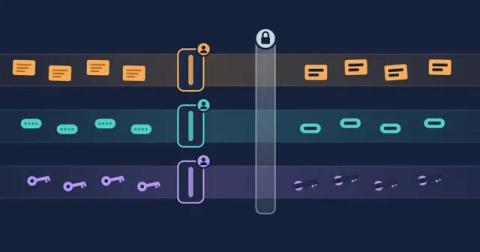
Team-Based DLP: Give Each Group Its Own Redaction Rules

A shared Kubernetes cluster rarely belongs to one team. Payments runs checkout in one namespace, search runs search-api in another, and a risk team runs a scorer somewhere else. One Speedscale forwarder captures API traffic for all of them. Redacting that traffic before it leaves the cluster is what makes it safe to use for testing (the background is in The PII Testing Dilemma). Until now, that forwarder ran exactly one DLP rule. Every team that needed a field redacted had to edit the same JSON document.

Best practices to define SLOs that actually reflect user experience

A marathon runner who trains obsessively on a flat track will have beautiful split times right up until race day when they discover the actual course has hills. Although the preparation was real, their strategy was flawed. This plays out in SLO teams more than anyone likes to admit. At first, numbers look fine and nothing has been triggered. Then, a support ticket comes in showing checkout has been down for 20 minutes. The SLO wasn't broken.

Using AI to Govern AI: Why Security Needs to Operate at Machine Speed

What caught my attention in the recent OpenAI and Hugging Face incident wasn’t any one exploit. It was the way the models could keep progressing across systems, combining techniques and acting with a level of speed and persistence that changes how security teams need to operate. The incident emerged during internal cybersecurity evaluations in July 2026.

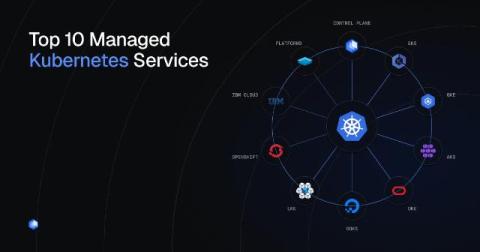
Top 10 Managed Kubernetes Services

Kubernetes has become a standard foundation for modern containerized applications, but operating clusters still requires significant engineering work. In the CNCF’s 2025 annual cloud native survey, published in January 2026, 82% of container users reported running Kubernetes in production. As adoption matures, the question for many teams is no longer whether to use Kubernetes, but how much of the operational burden they want to own.

What is a software factory?

A software factory is a system for turning engineering intent into production software through repeatable, increasingly automated workflows. It connects the tools, infrastructure, people, agents, validation, and delivery controls required to move work from an idea or issue into production. Coding agents have made the model newly relevant. Teams can now produce software changes much faster than traditional development processes were designed to evaluate and coordinate.

Token-based pricing: how AI usage billing works (2026)

Token-based pricing charges for AI by the volume of text a model processes, metered separately for input tokens (what you send) and output tokens (what the model returns). As of 2026, OpenAI, Anthropic, and Google all bill their APIs this way, and the model is spreading into enterprise chat products. Bills scale with usage rather than seats.

ElevenLabs pricing in 2026: plans, credits, and agent costs

ElevenLabs pricing runs from a free plan to $990 per month across six published tiers, with custom Enterprise above that. Plans meter usage in credits, where one credit roughly equals one character of speech. Voice agents cost $0.08 per minute on every tier, plus separate LLM and telephony charges. The AI agency PxlPeak published its own ElevenLabs invoice: $303 for January 2026, covering voice content for six clients, IVR systems for two, and live voice agents for three.

Kling AI pricing in 2026: plans, credit costs, API packages, and the spend no invoice shows

Kling AI pricing runs from a free tier of 66 daily credits to a reported $180 per month, with annual billing about 34% cheaper. Kling 3.0 bills per second: 6 to 12 credits for standard resolutions and 30 for native 4K. The API sells separate prepaid packages from $9.80 to $7,560.