Operations | Monitoring | ITSM | DevOps | Cloud

One Platform, Three Borders: Multi-Tenancy Isolation on Cycle

When it comes to multi-tenancy isolation, most platforms only support one approach, and you have to make it work for every customer. Usually that means either all tenants share the same infrastructure and rely on the application to keep them apart, or every customer gets a separate stack that your ops team has to deploy, patch, and monitor on its own. Both approaches work. The trouble is that they're rigid.
Internet2's certificate authority (eMudhra) is being distrusted

On Tuesday, October 27, Chrome will distrust an eMudhra root certificate, emSign ECC Root CA - G3. Mozilla already did. Most of the people who have to deal with it run IT at American universities. They get their certificates from InCommon, the certificate service Internet2 runs for higher education. The certificates say Internet2 on them, but since April, eMudhra, an Indian certificate authority, has issued them.

PHP2Shell: What the Critical PHP Vulnerabilities Mean for Your Servers

TL;DR On October 21, 2026, PHP released emergency patches for two critical flaws known together as PHP2Shell (CVE-2026-109618 and CVE-2026-109619). An attacker with no credentials can use them to run code on a PHP web server, in some cases with a single HTTP request. Upgrade to PHP 8.2.35, 8.3.36, 8.4.27 or 8.5.12 now. Then go through your logs, because exploitation attempts were recorded before the patch shipped. In this post.

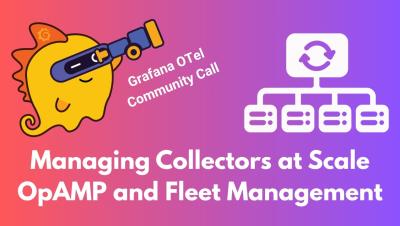
Managing Collectors at Scale: OpAMP and Fleet Management (Grafana OTel Community Call #11)

In this episode of the Grafana OTel Community Call, we're joined by Bejal Lewis and Paschalis Tsilias from Grafana Labs to talk about OpAMP, the Open Agent Management Protocol, and what it takes to manage OpenTelemetry Collectors at scale. We'll cover what OpAMP is and why fleet management matters, where the spec stands today (it's still pre-release), and what it was like building production tooling on top of it.

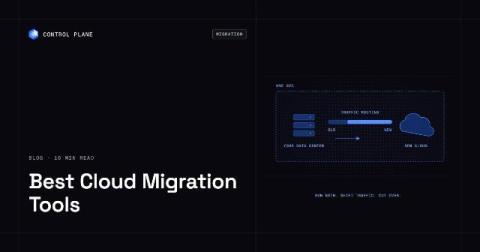
The Best Cloud Migration Tools and Services in 2026

The best cloud migration tool depends on what you are moving, from where, to where, and whether you can afford downtime. Native tools (AWS Transform MGN, Azure Migrate, and Google Cloud Migration Center) move servers into their own cloud. Replication tools move VMs and data with minimal downtime. Kubernetes tools move containerized apps. Platforms like Control Plane let you run the same workloads in the old and new environment at once, so you cut over gradually.

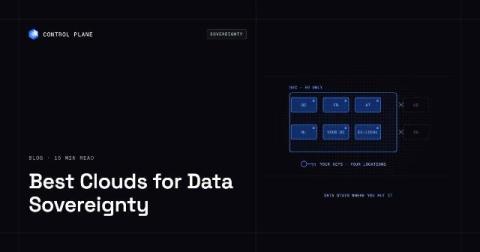
The Best Cloud Providers for Data Sovereignty and Residency in 2026

Data residency is about where data is stored and processed. Data sovereignty is about whose laws and operators can reach it. The strongest setups put regulated data in in-country regions or with sovereign providers, hold their own encryption keys, enforce placement with policy, and keep the ability to move. No single provider covers every country, so most teams combine two or three. Disclosure: Control Plane publishes this guide and is one of the options listed. This guide is not legal advice.

How to Stop Secrets Leaking From Your Deployment Platform, and How Qovery Stores Yours

Railway's disclosure of leaked customer environment variables is a reminder that deployment platforms hold the keys to everything. Here is how secrets leak from platforms, the practices that prevent it or limit the damage, and exactly how Qovery stores secrets across its control plane and your data plane, with AWS Secrets Manager, Parameter Store, GCP Secret Manager, Doppler and Infisical. Romaric founded Qovery to make Kubernetes accessible to every engineering team.

Sandbox Environments for AI Agents: A Full, Isolated Stack for Every Task

A code sandbox like Daytona or E2B isolates a process. A sandbox environment isolates a whole stack: services, databases, queues and configuration, cloned for one agent task and destroyed when it is done. Here is how sandbox environments work, what they are good for, and how to run them on Qovery. Romaric founded Qovery to make Kubernetes accessible to every engineering team. He writes about platform strategy, developer experience, and the future of cloud infrastructure.

One update can brick everything

When hardware operates unattended in remote locations, a failed update could be an operational disaster. Bricking a device hundreds of miles away turns a simple software patch into a costly physical recovery mission. Without built-in self-healing mechanisms, one bad deployment can paralyze your entire field operation. Canonical offers solution.