The following Prometheus exporters best practices will help you implement a monitoring solution based on Prometheus, and will also increase your productivity. Prometheus is one of the foundations of the cloud-native environment. It has become the de-facto standard for visibility in Kubernetes environments, creating a new category called Prometheus monitoring.
Connecting Sentry and PagerDuty is a great way to make sure important issues don’t get stuck in backlog purgatory. But sometimes there’s a drop-everything critical issue that can’t wait for a sprint planning meeting. That’s why we’re extending our PagerDuty integration to support Metric Alerts.
Monitoring has never been simple, but there was a time when it was simpler. You had a device you could collect data from; you knew the metrics you needed to monitor, and if something went wrong, you could find the root cause. But as IT becomes increasingly and exponentially more complex, more devices, more environments, more things to monitor, more updates, more data, more everything; monitoring in general needs to grow with it.
Most modern applications today are being designed as a set of microservices with each service running as an independent application. This simply implies that one large application is broken down into small Apps running independently and only communicating with each other. This of course makes it much easier to build and maintain Apps but also offers way more value when combined with containerization technology.
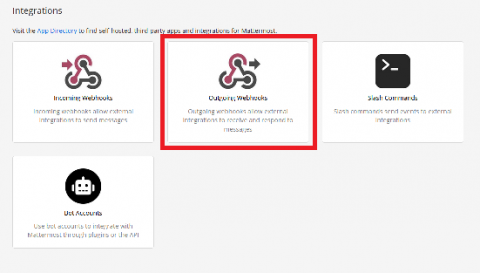
In a previous article, you learned how to receive data from an external source. In this article, you learn how to send a request or data to an external source using outgoing webhooks. As you learned from the first article in this series, we already receive alerts in Mattermost when the temperature of our fridge is too high. But what if we want to send a request to our fridges to give us the current temperature?
Last month, Catchpoint’s CEO, Mehdi Daoudi, took part in episode 3 of the MIT Sloan CIO Digital Learning Series focused on the post-pandemic workplace and customer experience. Episode 4, which took place over Zoom on Wednesday, September 9th, picked up where last month left off with a candid discussion between business leaders, consultants and MIT academics about the ongoing challenges enterprise is experiencing due to COVID-19 and how business leaders and others are handling them.
Trends in the infrastructure and software space have changed the way we build and run software. As a result, we have started treating our infrastructure as code, which has helped us lower costs and get our products to market more quickly. These new architectures also give us the ability to test our software faster in production-like deployments, and generally deliver more stable and reproducible deployments.