Operations | Monitoring | ITSM | DevOps | Cloud

Paul Hardy (ServiceNow): The Changing Role of IT

Our customers often stress the phenomenal power that comes from the integration of Nexthink and ServiceNow. Bernardo Ramos, for example, former Director of IT for Arkema, saw their integration as a way of getting real-time information on all their workstations automatically and without effort. “With ServiceNow I had the feeling of having something the best of its class,” he told us, shortly before his retirement earlier this year.


OpenStack at 10 - from peak to plateau of productivity

This week is the latest Open Infrastructure Summit, in a week where the OpenStack Foundation became the Open Infrastructure Foundation to reflect the expansion of the organisation’s mission, scope and community to advance open source over the next decade to support open infrastructure. It is also ten years since OpenStack launched and a lot has changed during that time.

Telco cloud: what is that?

Telco cloud or a network function virtualisation infrastructure (NFVI) is a cloud environment optimised for telco workloads. It is usually based on well-known technologies like OpenStack. Thus, in many ways, it resembles ordinary clouds. On the other hand, however, it differs from them. This is because telco workloads have very specific requirements. Those include performance acceleration, high level of security and orchestration capabilities.

Stackery is now a Amazon Linux 2 Ready Partner

As part of our expanding relationship with Amazon, we are excited to announce that Stackery is now recognized as Amazon Linux 2 Ready Partner, part of the Amazon Web Services (AWS) Service Ready Program. This designation recognizes that we are certified to run on Amazon Linux 2, the next generation of Amazon Linux, a Linux server operating system from AWS.

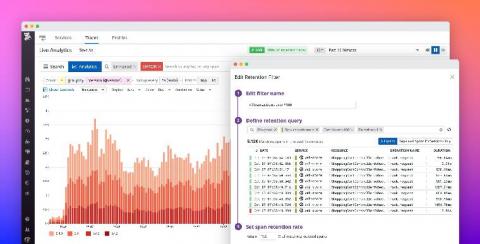
Tracing without Limits: live-query all traces, retain only the ones you need

Tracing is a critical part of monitoring application performance, especially as organizations shift to deploying services using distributed systems, serverless computing, and containerized environments. Teams need real-time, end-to-end visibility into all of the traces relevant to performance issues such as an application outage or an unresponsive service, but managing tracing costs often results in gaps in valuable tracing data.

Night of the Runbooks: a DevOps Horror Story

It was a dark and stormy night. Not really, of course; it was warm and pleasantly mild (the weather never seems to co-operate on these occasions), but indulge me by imagining appropriate meteorological conditions for the spine-tingling story I’m about to relate. It was Morgan’s very first night on call, and they were a mite nervous, as you can imagine.

Continuous Integration vs. Continuous Deployment

Thanks to Linus Torvalds, the creator of not only Linux, but also the most popular version control system - Git, multiple developers can simultaneously work on the development of the same application, ramping up the speed of production. Git was revolutionary - it enabled developers to keep track of code changes and collaborate seamlessly across different projects.

Quick tip: How Prometheus can make visualizing noisy data easier

Most of us have learned the hard way that it’s usually cheaper to fix something before it breaks and needs an expensive emergency repair. Because of that, I like to keep track of what’s happening in my house so I know as early as possible if something is wrong. As part of that effort, I have a temperature sensor in my attic attached to a Raspberry Pi, which Prometheus scrapes every 15 seconds so I can view the data in Grafana.

Verifying Large Refactors in Production with Sentry

Sentry is excellent at capturing runtime errors in your applications. With the recent additions of performance monitoring and release health, it can further help as you build and ship code. Recently we used Sentry to ensure we didn’t break Sentry while doing a large refactor. When replacing an API or code path with a new implementation you’ll likely ‘deprecate’ the old path, but how do you know when that old path is finally not in use?