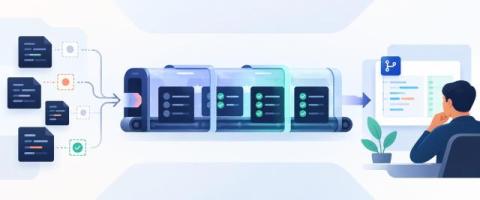
Engineers write tests for the logic that worries them and let the small details slide. One of our commerce engineering teams now has a scheduled agent that finds the thinly tested files, writes the missing tests, and opens a pull request for review. Nobody decides to skip a unit test. The core logic gets covered, the small details don’t make the cut, and most days that’s a fair trade.
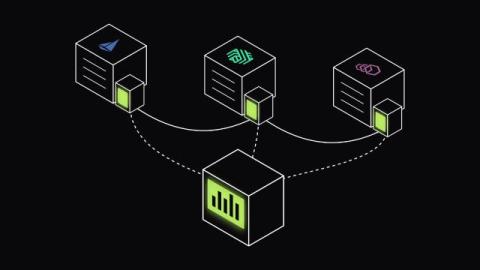
Service mesh observability guide: the metrics Istio, Linkerd and Envoy proxies emit, what ambient mode changes, and why tracing still needs app changes. Sejal Pandey works on content and growth at Last9, writing about observability, reliability, and SRE practices.
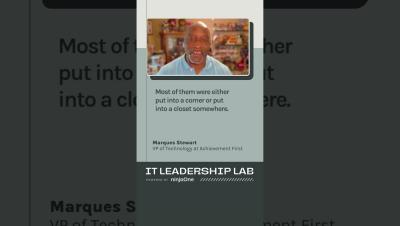
Not saying no to a bad call can cost you far more than an awkward conversation ever would. We were pitching schools on something nobody wanted, with no real answer to “why?” other than “the CEO said so.” Months of back-and-forth later, most of it ended up in a closet. If you think it’s the wrong call, speak up, and come with alternatives. Watch the full IT Leadership Lab session — linked above.
Join Grafana Labs CEO/Co-founder Raj Dutt, CTO Tom Wilkie, members of the engineering team, and Omar Lopez, Head of Observability for SailPoint, for the kickoff of ObservabilityCON 2026, where they share the latest in AI for observability, observability for AI, and solutions for all.
See how Teneo Managed Digital Employee Experience (Managed DEX) helps IT teams identify the root cause of application performance issues and resolve problems faster. Teneo Managed DEX gives service desk and IT teams deeper visibility into application crashes, response times, hang time, wait time and user experience across different application versions. In this short video, see how Managed DEX can help teams.
See how Teneo Managed Digital Employee Experience (Managed DEX) helps IT and service desk teams identify and resolve employee technology issues faster. By giving service desk engineers greater visibility into the digital employee experience, Managed DEX helps teams understand what is affecting users, investigate problems more efficiently, and move from reactive troubleshooting toward proactive IT support.
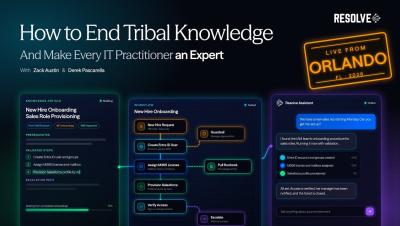
Every IT organization has a small group of people who hold the answers everyone else depends on, and that dependency carries a cost that never appears on a dashboard. It shows up in constant interruptions, on-call rotations that keep routing back to the same names, investigations rebuilt from scratch every time an incident resurfaces, and the pressure carried by the one person who knows how the environment behaves under stress.
Ever had a broken test stop your flow? In this Bitbucket Blitz video, we look at how to setup self-healing pipelines using Bitbucket and Bitbucket Agentic Pipelines. Instead of just failing and waiting for a human, the pipeline triggers an agent when a build or test breaks on a feature branch. The agent reads the logs, finds the root cause in the source code, creates a fix branch, and opens a pull request ready for review.
AI is writing code faster than ever. But what happens after the code is written? Harness CEO Jyoti Bansal introduces four AI agents built to automate the software delivery lifecycle: Software Delivery Agent – Automate builds, deployments, and infrastructure management. Security Testing Agent – Find, prioritize, and fix vulnerabilities with AI. Runtime Protection Agent – Protect applications, APIs, and AI agents in production.