Operations | Monitoring | ITSM | DevOps | Cloud

What is enterprise risk management and how does it work?

Enterprise risk management (ERM) is the practice of managing risk across an entire organization as one connected picture rather than as a set of separate departmental concerns. What changes when you adopt it is the purpose of the risk data itself. In most compliance programs, risk information exists to satisfy an auditor or fill a quarterly report. Under ERM, that same data has to be good enough to shape strategy, which raises the bar on how it gets scored, owned, and refreshed.
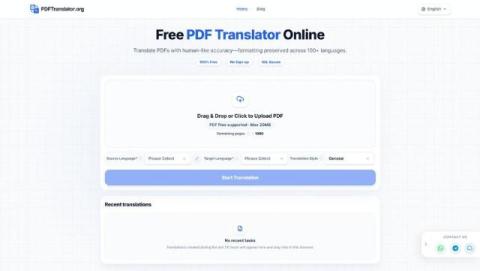

How to Use an AI PDF Translator for Technical Documentation

Technical documents such as runbooks, standard operating procedures, and maintenance manuals help teams work safely across countries. A PDF Translator can give global teams faster access to the same information without rebuilding files manually. Speed is not enough, however. A mistranslated command, warning, or system status can create operational risk. An online PDF translator should therefore be used with terminology management, technical review, and final approval.

The Early Warning Signs of Financial Identity Fraud

Financial identity fraud rarely begins with one dramatic event. More often, it arrives as a handful of details that feel slightly off. A login code appears even though you were not trying to sign in. A lender sends a letter about an application you never submitted. Your bank app asks you to verify information that has not changed. Any one of these could be a mistake. That is why early fraud is easy to miss. The problem often becomes visible only after several small inconsistencies begin to overlap.

4 Best Local SEO Companies in Vancouver, BC

Getting found in Vancouver's local search results is harder than most business owners expect. Local SEO companies in Vancouver deal with genuinely tough conditions: a competitive market across dozens of industries, NAP consistency across Canadian and global directories, and the ongoing grind of building authentic reviews on Google and Yelp. After reviewing agencies based on verified client outcomes, ratings, and real-world track records, this guide covers the four options worth your attention.

Application Level Dependency Chaos Testing

Somewhere in your service is a branch that has never executed. Not a rare one, a never one. It handles a dependency being unavailable: it reads from a cache, it returns a stale value, it marks the response degraded so callers know not to trust it too far. It was written carefully. It was reviewed. Whether it works is an open question, because nothing in the test suite makes that dependency fail, and the dependency does not fail on request.

Break One Dependency, Not The Whole Cluster

Scoped chaos rules are now in proxymock. A filter query picks the traffic, an effect perturbs it, and every response that gets touched is labelled so you can tell an injected failure from a real one for the rest of the run. Available in v2.5.892 and newer. The short version of why: kill a pod and you learn something real, but you do not learn what your service does when a dependency stays up and starts lying to it.

Built-in vs. custom: How to choose a Konstruct cluster template strategy

If you've ever inherited a cluster that nobody fully understands, or watched two teams solve the same infrastructure problem in completely different ways, you've already felt the cost of not having a template strategy. It's not always dramatic; it starts with a different CNI here, a missing cert-manager version there, but it compounds. Six months later, cluster configuration is tribal knowledge, and the platform team has become the bottleneck.

CircleCI Smarter Testing: Stop running tests that don't matter

Testing consumes up to 50% of CI/CD pipeline time. That’s the single most expensive place in your delivery pipeline, and a meaningful share of that time is often wasted running tests unaffected by the change. Every time a developer pushes a commit, the full test suite runs. A two-line bug fix in auth.py triggers 2,000 tests, including 1,900 that don’t touch anything near auth.py. Those unrelated tests are overwhelmingly likely to pass, but the pipeline still spends 20 minutes running them.

Beyond the $1 AI era: How federal agencies can build the evidence for FY27 renewals

Over the past year, federal agencies gained broad access to enterprise AI through the OneGov initiative, at prices unlike any normal software deal. The current OneGov portal lists OpenAI ChatGPT Enterprise at $1 per agency, Anthropic Claude at $1 per seat, and Google Gemini for Government at $0.47 per agency. Those introductory offers begin expiring on September 30, 2026, the final day of fiscal year (FY) 26, which places renewal squarely in the FY27 planning cycle.

How Datadog saves over $1 million each month by optimizing AI usage

At Datadog, we want to expose our engineers to high-quality AI tools and workflows. However, token usage can be expensive, and finding a balance between AI cloud spend and the return on investment can be difficult. But what if engineers could maintain their current AI workflows using the same tools, but at a lower cost?