Database source control using Flyway, a summary - Scott Sauber
Scott Sauber, Director of Engineering at Lean TECHniques Inc., recaps his experience of how organizations use Flyway to source control the database in different scenarios.


The latest News and Information on DevOps, CI/CD, Automation and related technologies.
When it comes to risk management in banks, cloud-based computing offers significant advantages. On the other hand, risk managers will have a tough time making the switch from on-premises to the cloud.
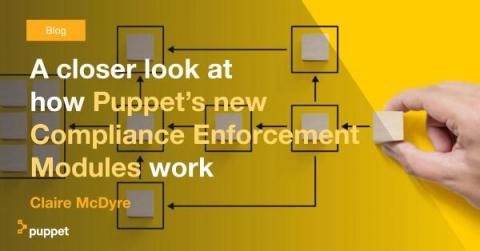
Since we launched Puppet Comply last year, we’ve been working hard to build out the solution’s capabilities so that we can provide our customers with more options in implementing a continuous compliance program, and become more proactive and efficient in how they manage compliance. A key activity in any strong continuous compliance program is remediation.
Modern software development increasingly relies on distributed, service-based architectural patterns to achieve scalability, reliability, and rapid build, test, and release cycles. Two of the most popular service-based approaches are service-oriented architecture (SOA) and microservices. In this article, we will examine both approaches to identify their similarities and differences as well as some use cases for each.
Kotlin is one of the most versatile programming languages available, in large part because of the Kotlin team’s focus on bringing it to as many platforms as possible. It is the primary language for developing Android applications and is popular for JVM backends. Kotlin also features targets for native binary compilation with Kotlin/Native, and for web through Kotlin/JS. One of its most promising features is the ability to target multiple platforms it compiles to.
Apache has disclosed a critical actively exploited path traversal flaw in the popular Apache web server, version 2.4.49. This path traversal means that an attacker can trivially read the contents of any file on the server that the Apache process has access to. This could expose highly sensitive information, even as critical as the server's own private SSL certificates. See the Sonatype blog for more technical information on the vulnerability.