Operations | Monitoring | ITSM | DevOps | Cloud

The latest News and Information on Cloud monitoring, security and related technologies.

How to ensure compliance with private cloud providers in regulated sectors

The compliance question isn't "are we using a private cloud?" Rather, it’s "does our private cloud actually do what compliance requires?" Private cloud has a reputation for solving compliance problems that it doesn't always deserve. The logic seems straightforward: keep data off shared public infrastructure, maintain more direct control, and satisfy the auditors.
8 Cloud Governance Automation Tools for Multi-Cloud Kubernetes in 2026

Compare cloud governance automation tools for multi-cloud Kubernetes across policy enforcement, SOC 2 and HIPAA automation, multi-cloud coverage, and CI/CD integration. Morgan co-founded Qovery and leads engineering. He writes about Kubernetes architecture, DevOps best practices, and building resilient infrastructure at scale.

Your FY27 plan deserves a real AI number, not a hedge

Budget season is starting and most finance teams are finding the AI line is the most evasive line on the page. You lived through the year. AI spend came in higher than planned and moved in ways nobody could foresee or forecast. And when the board asked what it produced, the honest answer probably was “we’re working on it.”

Shipped: Codex spend tied to the work behind it

People run Codex on their own laptops. When Codex is signed in with a ChatGPT subscription, OpenAI’s own admin console shows who used it and how much: messages and credits. What it doesn’t show is what any of that usage was for, or how it compares to what your team spent on other AI tools. The CloudZero desktop agent for macOS installs on a Mac, sees the traffic from AI coding tools, and prices what those tools use.

Why is AI so expensive? The real cost drivers of AI

AI is expensive because the model bill is only part of the cost. Three components set the floor: model subscriptions, per-token API pricing, and infrastructure. Three more make it move: adapting models to your business, catching and fixing errors, and rising energy and datacenter costs. Efficiency doesn't fix it, because cheaper AI gets used more, not less. Businesses are willing to spend on AI. Research from Deloitte found that in 2025, 85% of organizations increased their AI investments.

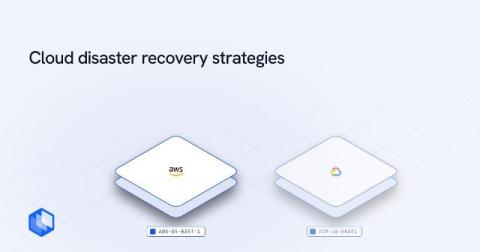
Cloud disaster recovery strategies, RTO/RPO targets, and best practices

Most DR plans have a fatal assumption baked in, namely that the cloud provider stays up. Your runbook says “failover to us-west-2.” That works until the provider’s control-plane services degrade and the credentials, APIs, or DNS management your failover workflow depends on become unreliable. Single-provider DR is disaster deferral.

Shared context for AI coding agents beats better tooling

The instinct when adopting AI coding agents is to optimize the agent. Compare models, tune prompts, argue about which editor has the better completion, and treat the agent as the thing that determines how fast the team moves. Then the commits go up and the product does not. The team building Upsun Dispatch took a different route, and the result is worth copying. They did not find a better agent.

Shipped: Monthly cost comparison in Explorer gets a glow up

Months have different numbers of days, and a monthly cost chart built on raw totals mixes that calendar difference into the trend. A 28-day February next to a 31-day March shows a 10.7% increase even when daily spend never moved. The same math works in reverse: real growth in a short month can look flat, hiding an increase worth investigating. That costs you time in two places. The first is triage.

AI budgeting: how to plan and forecast AI spend

AI budgeting is the process of planning, allocating, and forecasting an organization's AI spend: model and API costs, AI infrastructure, tooling, and the people running it all. It differs from traditional budgeting because AI spend is usage-based, scales with product success rather than headcount, and often spans multiple providers.

Sharing GPUs without Flying Blind: Kubernetes Patterns for AI Inference

GPU sharing is quickly becoming a practical requirement for Kubernetes-based AI inference, as many modern workloads don’t need a full GPU to deliver value. But safely placing multiple containers on the same accelerator brings new challenges: scheduling, fairness, isolation, observability, and noisy-neighbor behavior. This 20 min session explore the GPU sharing landscape across Kubernetes: time-slicing, MPS, MIG, KAI Scheduler, and HAMi, and dives into the harder problem: operating shared GPUs in production, from tracking usage to enforcing fairness as demand shifts.