Operations | Monitoring | ITSM | DevOps | Cloud

The latest News and Information on Cost Management and related technologies.

Marginal Cost Explained: The KPI Every SaaS CFO Cares About (But You Rarely Track)

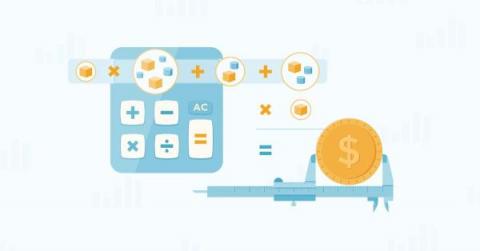
Ask a SaaS team how they measure cloud efficiency, and you’ll hear familiar things. Total cloud spend. Average cost per customer. Maybe a breakdown of spend by service. All useful, but rather wobbly. Now ask, “What does it cost you to serve one more customer?” That’s when the room goes quiet. And that’s often where cloud economics gets really wobbly. Because that number, your marginal cost, is what actually determines your margins. Not your total cloud bill.

Optimize Your Oracle Cloud (OCI) Spend with Datadog Cloud Cost Management

Support for Oracle Cloud Infrastructure (OCI) is now live in Datadog Cloud Cost Management. In this short demo, you’ll learn how to: Get granular visibility into OCI cost and usage—by service, compartment, tag, and resource tier. Uncover savings opportunities by combining cost data with observability metrics like CPU, memory, and storage utilization. Set up anomaly monitors and budgets to avoid cost overruns—especially for high-risk workloads like AI and GPU training.

Mastering AI Spend With CloudZero And LiteLLM

The AI landscape today feels a lot like the early days of the cloud: exciting, fast-moving, and completely fragmented. Every week, engineering teams are experimenting with dozens of large language models (LLMs) from providers like OpenAI, Anthropic, Google, Mistral, Meta, and beyond. They’re tweaking prompts, testing model performance, swapping context windows, and even running multiple models in parallel to figure out which one works best for each unique use case.

From FinOps for AI to AI-Native FinOps

One year ago, at AWS re:Invent, we launched CloudZero Advisor, a free, standalone AI assistant that enables anyone to ask questions about cloud spend in plain language. It was the first experiment of its kind in FinOps, a chance to see what people really wanted to know when cost data finally became conversational. Over the past year, Advisor has become a learning engine.

FinOps 2.0: From "Cost Dashboards" to "Autonomous Kubernetes Optimization" and "FinOps as Code"

The cloud waste problem shows up everywhere. It points to how complicated things have gotten with modern setups. Some groups see waste hitting 80 percent. That makes sense when people check dashboards only now and then. Reports come in way too late to do much about it. Cloud spending will top 825 billion dollars by 2025. For lots of companies, those costs match up with payroll now. Still, handling them often feels like just following loose suggestions.

How to Reduce Redundant Data to Save on Cloud Storage Costs

With more and more business organizations adopting cloud storage to handle their data, the problem of redundancy or duplication of files has become of great concern. Duplicated information does not only eat up the precious storage space but also increases expenditure and lowers productivity. The reason why companies end up paying to store files that they do not require is because duplication of files over time occurs particularly when more than one team or department is doing a common project. Learning to detect and remove duplicate data is a key to the cost control and ability to manage data in general.

Metrics That Matter In FinOps: Co-Create Value With Engineering And Finance Collaborations

FinOps thrives on clarity, and clarity is built on metrics. Metrics give engineering and finance a shared language to understand costs, evaluate trade-offs, and guide innovation. The most impactful metrics go beyond “how much are we spending?” and help us answer: When we measure these things, we stretch beyond tracking progress to fueling it.

Smooth Operator: The Role Of Autonomous FinOps In Cloud Cost Management

(Almost) everyone is using generative AI, and just as many aren’t seeing any benefits. Research firm Gartner calls it the “gen AI paradox” — nearly 80% of companies say they’ve invested in generative solutions, and the same number report no benefits to their bottom line. What’s more, 90% of projects are stuck in pilot mode; ready to take off, but just can’t get up to speed.

IA for AI: Rethinking How We Store, Surface, And Share Data In A Conversational World

Information architecture used to be about structure. We organized menus and pages into trees, built hierarchies, and created pathways for people to follow. For years, that worked. Navigation was the interface. But that world is changing. People aren’t clicking their way through information anymore. They’re asking for it. They’re refining questions, expecting context, and assuming that systems will not only understand what they mean, but act on it.