Operations | Monitoring | ITSM | DevOps | Cloud

The latest News and Information on Containers, Kubernetes, Docker and related technologies.

The Three Pillars of Kubernetes Observability

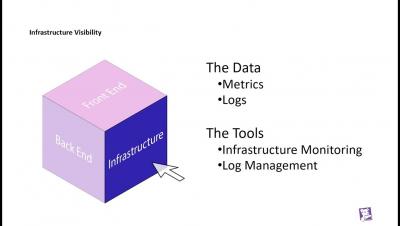
The three pillars of observability are metrics, logs, and traces. To get a complete view into your applications as well as the Kubernetes platform they run on, you need to be looking at all the different perspectives. In this session, we will look at each pillar to see how we can use the information collected to understand what is happening in our environment today and how to troubleshoot the problems we experience tomorrow. We will share how to do this using various open source tools as well as using the Datadog platform.

Docker Build: A Beginner's Guide to Building Docker Images

Docker has changed the way we build, package, and deploy applications. But this concept of packaging apps in containers isn’t new—it was in existence long before Docker. Docker just made container technology easy for people to use. This is why Docker is a must-have in most development workflows today. Most likely, your dream company is using Docker right now. Docker’s official documentation has a lot of moving parts. Honestly, it can be overwhelming at first.

Docker Swarm vs Kubernetes: A Helpful Guide for Picking One

Docker and Kubernetes have taken the software world by storm. DevOps, containers, and container management are at the center of most conversations about what’s relevant to technology. Tooling and services that ease running software in containers, therefore, occupy the minds of developers. Great tools and platforms create options and possibilities. They also create challenges in understanding available choices, though.

Solving Kubernetes Configuration Woes with a Custom Controller

Two years ago, Pusher started building an internal Kubernetes based platform. As we transitioned from a single product to multiproduct company, we wanted to help our product teams spend less time worrying about shared concerns such as infrastructure and be able to focus more on writing business logic for our products. Over this period, our platform team have solved many of the problems that Kubernetes doesn’t solve out of the box. Until recently, we had not solved the problem of configuration.

5 Best Practices for Using AI to Automatically Monitor Your Kubernetes Environment

If you happen to be running multiple clusters, each with a large number of services, you’ll find that it’s rather impractical to use static alerts, such as “number of pods < X” or “ingress requests > Y”, or to simply measure the number of HTTP errors. Values fluctuate for every region, data center, cluster, etc. It’s difficult to manually adjust alerts and, when not done properly, you either get way too many false-positives or you could miss a key event.

Intro to k3s: Lightweight Kubernetes

Ready to get some training on using K3s, the lightweight Kubernetes distribution?Earlier this year, Rancher Labs introduced k3s, a new open source project which is a lightweight implementation of Kubernetes that is easy to install and can run on x86 and ARM infrastructure with only 512 MB of RAM required to run it. It is geared towards teams that need to deploy applications quickly and reliably to resource-constrained environments. Some use cases for k3s are edge, Single Board Computers, IoT, and CI.

Announcing The Close of Our Seed Round: $3.1 Million

The round was led by Peterson Ventures, with participation from new investors Prelude Venture Fund, SaaS Ventures, and Forward Venture Capital and participation from existing investors Trilogy Equity Partners and Cobre Capital. It has been amazing to see the positive feedback we’ve received from our customers as we work to make the first fully automated infrastructure monitoring and alerting solution.

33 Kubernetes security tools

Kubernetes security tools … there are so freaking many of them; with different purposes, scopes and licenses. That’s why we decided to create this Kubernetes security tools list, including open source projects and commercial platforms from different vendors, to help you choose the ones that look more interesting to you and guide you in the right direction depending on your Kubernetes security needs.

How to detect Kubernetes vulnerability CVE-2019-11246 using Falco

A recent CNCF-sponsored Kubernetes security audit uncovered CVE-2019-11246, a high-severity vulnerability affecting the command-line kubectl tool. If exploited, it could lead to a directory traversal, allowing a malicious container to replace or create files on a user’s workstation. This vulnerability stemmed from an incomplete fix of a previously disclosed vulnerability (CVE-2019-1002101). Are you vulnerable?