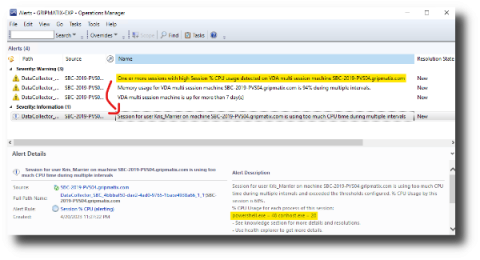
We are happy to announce that we have created a SCOM integration with OpenAI Chat GPT. The solution checks for any alert generated in SCOM and then requests the artificial intelligence service to give you possible root causes and fixes to solve the issue. Moreover, it will take into account any other issues the respective degraded component or service is experiencing and consult you accordingly.
Are Citrix latency causing issues for your end users? Pin-pointing the root-cause of latency can be a challenge because it can occur in any part of the network and in any tier. Knowing where to start troubleshooting can mean the difference between end-users not noticing and a flood of support tickets on the service desk. In this guide I teamed up with eG Innovations to talk about what Citrix latency is, why it matters, and how we can improve it.
A common mistake IT organizations make, is having a well-designed Public Key Infrastructure (PKI), but at the same time having client devices, such as monitoring agents for your Citrix NetScalers, which accept to set up any encrypted connection, to any device, no matter what certificate they are presenting. In this case, you basically allow connections to be made to devices you do not know whether they can be trusted. This makes you vulnerable for 'spoofing'.
Every Citrix VAD/DaaS engineering team is responsible for a healthy Citrix VAD or DaaS deployment (yes also DaaS). But the most important task is providing great user experience. Is the team sure end users are actually getting that great user experience? Can they prove it? Are they going to be alarmed immediately whenever they are not and find the root cause quickly? Does the team know which users are affected.
Every Citrix engineer knows it is quite a burden to install, configure and update monitoring agent software on Citrix VDA machines as this requires you to create and deploy new master images every time you need to deploy a new agent version. While it requires some manual actions, the SCOM platform does natively support monitoring through agentless managed devices which you can onboard with the SCOM discovery wizard.
The Citrix HDX Teams Redirection Service is part of the Citrix Virtual Desktop Agent software since version 1906. The service runs on a VDA machine (single- or multi-session) and provides redirection services which offload audio, video and screensharing in Microsoft Teams for optimizing the user experience for Microsoft Teams when used within the VDA.
The Load Capacity Usage percentage, or Load Evaluator Index, for a Citrix Virtual Apps and Desktops or DaaS multi session machine delivery group, represents the percentage of resources allocated to that delivery group, that is in use by virtual desktop or application sessions. It is the ratio between the sum of all measured Load Indexes, and the sum of all maximum Load Indexes for the multi session machines in the delivery group. A Load Index represents the load on a multi session machine.
The Citrix Print Manager Service is part of the Citrix Virtual Desktop Agent (VDA) software which runs on a single or multi session machine. It is used for the Citrix Advanced Universal Printing Architecture. It takes care of the client printer mappings between a user client and the VDA within an ICA session. This service heavily relies on the Windows Print Spooler service which spools print jobs and handles interaction with the printer.
The Citrix Audio Redirection Service is part of the Citrix Virtual Desktop Agent (VDA) software which runs on a single or multi session machine. It is responsible for redirecting audio over the Audio Virtual Channel to be used within the ICA session. If this windows service has stopped running, users having a virtual desktop session to the respective session machine have no sound.