Operations | Monitoring | ITSM | DevOps | Cloud

How to measure developer experience (DevEx) in the AI era

As AI coding assistants dramatically inflate PR counts, commit frequency, and lines of code, the limitations of individual output metrics have never been more apparent. A developer can now produce significantly more lines per session, but higher volume doesn’t guarantee that the code is stable, maintainable, or successfully running in production. GitClear analyzed over 200 million lines of code and found that code churn nearly doubled following widespread AI adoption.

Project and manage cloud spend with Datadog budget forecasting

Cloud and SaaS spending continues to grow across teams, services, and providers, changing too quickly for retrospective cost management workflows to keep up. Finance and engineering leaders often rely on last month’s reports or manually maintained spreadsheets, which don’t reflect current usage. As a result, teams lack context on how spend is trending and often discover budget overruns only after they’ve occurred.

How to audit and clean up monitors effectively

Alert fatigue and blind spots develop together. Monitoring stacks that generate noise while missing critical issues may have incomplete coverage or poorly configured alerts. As they grow reactively and without structured coverage assessment, both issues worsen. Teams will often add monitors when something breaks and tune thresholds when alerts become unbearable, but rarely audit their overall setup to see if it works.

How we made a SQL query optimization agent 59% more accurate using autoresearch and LLM Observability

Without experiment infrastructure to help you test your LLM applications, every research session starts with the same questions: What have we tried previously? What were the numbers? Which prompt version produced that result? Why did we discard that approach? The answers live in scattered notes, terminal history, and half-remembered conversations. Each handoff between sessions loses context. In practice, iteration can slow down as teams get bogged down in testing and analysis.

Explore Datadog metrics with Natural Language Queries

Metric exploration often begins with a simple question, but answering that question can require deep familiarity with metric names, tag structures, and query syntax. Experienced users spend time refining queries through trial and error, and newer users struggle to get started. As a result, teams face delays in troubleshooting and analysis. Valuable observability data, including metrics that are difficult to discover and query, also goes underused.

Diagnose slow PostgreSQL queries faster with explain plan correlation

When a PostgreSQL query runs slowly, engineers often start with EXPLAIN ANALYZE. The output is a tree of plan nodes, each one describing a step the database took to execute it. A query with several joins and a subquery can produce 20 or more nodes. But the plan gives no visual indication of which node corresponds to each clause in the SQL text. Diagnosing the problem means viewing the plan in one window and the query in another, manually tracing connections between them.

Attribute AI costs across providers with Datadog Cloud Cost Management

AI adoption is accelerating across organizations, and spending often follows a similar pattern: rapid growth, multiple providers, and limited visibility into where costs originate. Each provider exposes billing data differently, with distinct schemas, dimensions, and interfaces. FinOps and engineering teams often spend significant time consolidating fragmented data, only to end up with partial attribution and limited context about who or what generated the AI spending.

Simplify micro-frontend observability with Datadog RUM

Micro-frontend architectures, where independent teams build and deploy separate parts of a frontend application, introduce an observability challenge: Telemetry data is fragmented across services, making it difficult to determine which micro-frontend caused a performance degradation or error spike.

Diagnose and resolve database performance issues faster with Database Investigator

When your database performance degrades, diagnosing the root cause is rarely quick or straightforward. Your existing tools might surface metrics like CPU utilization, wait events, and query duration, but then leave you to correlate the data and identify what went wrong. Worse, what first appears to be the root cause can often just be a downstream effect of multiple interrelated issues.

Observability and Security for the AI Era

Datadog has always been driven by a broader vision of helping teams understand and operate complex systems. In this session, you’ll hear from Michael Whetten, Product SVP, and Abrar Hussain, Senior Director, Product Management, as they share the latest updates across the Datadog product suite and discuss how that vision continues to shape the platform’s evolution and support the next generation of AI-driven applications.

Datadog for Government achieves FedRAMP High certification

Modern government missions depend on software platforms that can perform under demanding conditions. As agencies update systems that support public safety, benefits delivery, financial operations, and national priorities, they face security and compliance requirements that shape how technology is adopted as well as how it is built, operated, and evolved over time.

Analyze cloud costs with flexible spreadsheets in Datadog Sheets

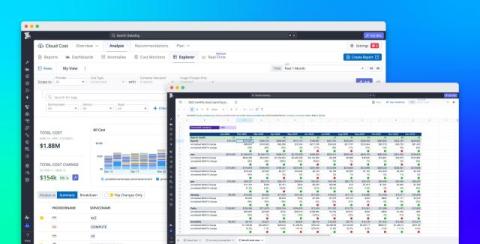
Cloud cost data is most useful when teams can adapt it to their own reporting and planning needs. In addition to viewing cost breakdowns, FinOps teams often need to calculate forecasts, reshape datasets, and present tailored views to finance and leadership teams. In many workflows, those steps happen outside the observability platform. Once the data is exported, it quickly becomes outdated and requires repeated manual updates.

How to Measure your Most Expensive Milliseconds

In the fast-paced world of mobile development, reliability rarely fails with a loud crash; instead, it degrades quietly through micro-regressions that erode user trust and engagement. While most companies track backend health and API latency, they often fly blind regarding the actual screen-level responsiveness that defines the true user experience. When Expedia Group underwent a major technical evolution, the team realized they lacked a consistent baseline to compare performance across platforms, leaving them unable to validate improvements before rollout.

Monitor and optimize Supabase query performance with Datadog Database Monitoring

Built on Postgres, Supabase is an open source, all-in-one backend platform for developers who want to ship applications without managing infrastructure. This makes it especially popular with frontend developers and vibe coders who may have little to no database expertise. Datadog's Supabase integration provides high-level infrastructure metrics, but developers also need query-level visibility to easily diagnose, optimize, and trace performance issues back to their source.

This Month in Datadog - April 2026

In the latest episode of This Month in Datadog, Jeremy shares how to run autonomous Cloud SIEM investigations, remediate vulnerabilities with auto-generated fixes, and use natural language to explore Datadog. Later, Sumedha Mehta spotlights the Datadog MCP Server, which gives AI agents real-time access to Datadog’s observability data. Then, Chetan Sharma walks through Datadog Experiments, which measures how product changes impact the user journey.

Add dynamically updating context to logs with Reference Tables and Observability Pipelines

Security and platform engineering teams rely on context-rich logs to investigate threats, prioritize incidents, and meet compliance requirements. Context is often stored separately from applications that generate logs, in sources like threat intelligence feeds in Snowflake, asset lists in Amazon S3, ownership data in ServiceNow CMDB, and risk scores produced in Databricks.