Operations | Monitoring | ITSM | DevOps | Cloud

Skills and talent - the fuel powering the Europe's data economy forward

The data economy may hinge on technology but it is being driven-forward by people. The fourth piece in our series explores this side of the data economy in detail looking at the evolution of digital skills required in today’s market. Featuring insight from Dojo, Atomico and WorkOrb, it looks at the challenges of finding people with the necessary skills and touches on what is required from a human capital perspective for companies to best achieve success in the data economy.

Turning Metrics into Insights: How to Build a Modern, Intelligent DevOps Monitoring Pipeline

When Netflix buffers or AWS goes down, teams spring into action. But how do they identify and fix issues so quickly? The secret lies in intelligent DevOps monitoring, a system that not only watches but understands your infrastructure’s behavior. In this hands-on guide, we’ll build a modern monitoring pipeline that helps you catch and resolve issues before your users notice them. We have prepared a sample Python application that we encourage you to play with to understand the system in action.

2025: The Year of 1,000 DataFusion-Based Systems

Apache DataFusion has reached an inflection point. It has matured beyond early adopters and is now a viable choice for anyone building highly performant analytic systems. I predict 2025 will bring a significant acceleration in the number of systems built on DataFusion, and my focus this year is to help drive that growth.

Strategic IT Consulting: How Expert Guidance Can Transform Your Business

Businesses face the constant challenge of keeping pace with technological advancements. The landscape of information technology (IT) is rapidly evolving, making it essential for organizations to adopt cutting-edge solutions that enhance operational efficiency and foster growth.

Anodot vs. Cast AI: Which FinOps Platform Delivers All-Inclusive Value?

There’s no doubt about Kubernetes’ importance for success in the cloud. It offers a cost-efficient, scalable, and automated platform for managing containerized applications while simplifying operations. Cast AI is a well-established platform specializing in Kubernetes optimization, including workload rightsizing and cluster autoscaling. But is that enough for MSPs and enterprises prioritizing cloud costs?

Business Intelligence (BI): What It Means for Your Organization

Data drives the modern business world, and organizations capable of leveraging it effectively maintain a significant edge over their competition. Business Intelligence (BI) has emerged as a critical tool, enabling companies to turn raw data into actionable insights. But what exactly is BI? This blog explores everything you need to know about business intelligence, from its components to use cases, to implementation strategies.

How to monitor Snowflake performance and data quality with Datadog

In Part 2 of this series, we looked at Snowflake’s built-in monitoring services for compute, query, and storage. In this post, we’ll demonstrate how Datadog complements and extends Snowflake’s existing monitoring and data visualization capabilities, enabling teams to get deeper visibility and extract more valuable insights from their Snowflake data.

Tools for collecting and monitoring key Snowflake metrics

In Part 1 of this series, we looked at how Snowflake enables users to easily store, process, analyze, and share high volumes of structured and semi-structured data, as well as key metrics for monitoring compute costs, storage, and datasets. In this post, we’ll walk through how to collect and analyze these metrics using Snowsight, Snowflake’s built-in web interface.

Key metrics for monitoring Snowflake cost and data quality

Snowflake is a self-managed data platform that enables users to easily store, process, analyze, and share high volumes of structured and semi-structured data. One of the most popular data platforms on the market, Snowflake has gained widespread adoption because it addresses a range of data challenges with a unified, scalable, and high-performance platform. Snowflake’s flexibility enables users to handle diverse workloads, such as data lake and data warehouse integration.

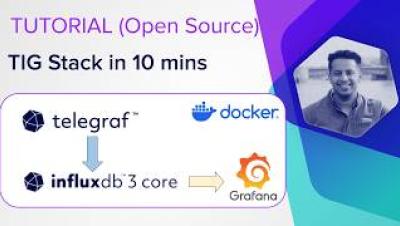
InfluxQL vs SQL for InfluxDB

InfluxDB is a purpose-built time series database designed to handle high-write throughput and large volumes of time-stamped data. From monitoring system metrics to tracking IoT device readings and analyzing financial trends, it excels in scenarios where time is a fundamental factor. With the release of InfluxDB v3, users now benefit from dual query language support: SQL and InfluxQL.