Operations | Monitoring | ITSM | DevOps | Cloud

Introducing On-Demand Logging with Logz.io Drop Filters

Logs need to be stored. In some cases, for a long period of time. Whether you’re using your own infrastructure or a cloud-based solution, this means that at some stage you’ll be getting a worried email from your CFO or CPO asking you to take a close look at your logging architecture. This, in turn, will push you to limit some data pipelines and maybe even totally shut off others. Maybe we don’t need those debug logs after all, right? Wrong.

Instantly parse the top 12 log types

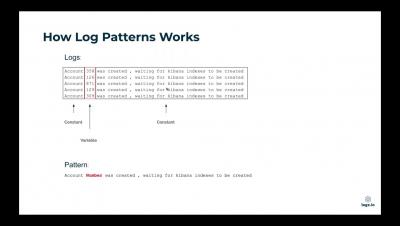
Throughout the past few months, I had the opportunity to work with and serve hundreds of Coralogix’s customers, the challenges in performing efficient Log Analytics are numerous, from collecting, searching, visualizing, and alerting. What I have come to learn is that at the heart of each and every one of these challenges laid the challenge of data parsing. JSON structured logs are easier to read, easier to search, alert, and visualize.

What is Amazon Redshift?

In this blog series, we will cover how Amazon Redshift and Sumo Logic deliver best-in-class data storage, processing, analytics, and monitoring. In this first post, we will discuss how Amazon Redshift works and why it is the fastest growing cloud data warehouse in the market, used by over 15,000 customers around the world. When an organization gains traction, the size of data that needs to be stored, monitored, and analyzed expands exponentially.

Performance Marketing Company Replaces In-House Business Monitoring System With Anodot

In performance marketing, KPIs are directly proportional to revenue. Avantis is a performance marketing company that, prior to Anodot, had used a variety of in-house monitoring solutions and SAS tools to monitor the KPIs that drove their business. But they found their top metrics, such as impressions, clicks, click-through rate (CTR) and postbacks, were often much different than their publishers’.