Operations | Monitoring | ITSM | DevOps | Cloud

How to Use Tech Advancements to Grow a Home Service Business

Home service businesses, ranging from cleaning, and landscaping, to HVAC services, are the unsung heroes that underpin the smooth operation of our homes. These businesses provide essential services, ensuring our homes remain comfortable, functional, and aesthetically pleasing. In recent years, technological advancements have dramatically reshaped the home service industry landscape, fostering efficiency, scalability, and improved customer service.

The Future of Cloud Native Data is Now

Struggling with data complexities in distributed apps? Watch our webinar with Google Cloud and TechCrunch on mastering cloud-native data! Join Aiven’s Matty Stratton and Google’s Kaslin Fields, as they guide you through the steps to manage the data on your distributed applications. By leveraging data’s inherent gravity, it can be used across all components of your applications.

Pepperdata Capacity Optimizer Next Gen: How Pepperdata Can Save 30% Off Your Cloud Bill

Pepperdata Capacity Optimizer Next Gen is the only cost optimization solution for both Apache Spark and microservices that can save you between 30–47% on your cloud bill. No matter if you try to manually tune your applications on your own, an estimated one-third of what is spent every day on cloud computing resources is wasted. While you might have cost-optimized your infrastructure with things like savings plans, spot and reserved instances, that doesn’t address the waste inherent in your applications.

Build a Data Streaming Pipeline with Kafka and InfluxDB

InfluxDB and Kafka aren’t competitors – they’re complimentary. Streaming data, and more specifically time series data, travels in high volumes and velocities. Adding InfluxDB to your Kafka cluster provides specialized handling for your time series data. This specialized handling includes real-time queries and analytics, and integration with cutting edge machine learning and artificial intelligence technologies. Companies like as Hulu paired their InfluxDB instances with Kafka.

Using Cribl Stream to Correct Misconfigured Data in Datadog

The challenge for every organization is gathering actionable observability information from all your systems, in a timely manner, without creating a substantial operational burden for the teams managing the collection tooling. While each observability solution has its unique benefits and challenges, the one common burden expressed by teams is the management of the metadata of the metrics, traces, and logs.

Data Visualization for Everyone: How To Simplify the Process

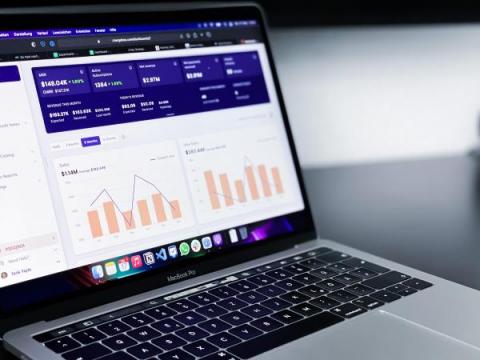
Nowadays, data is being generated at an unprecedented pace. Data is collected everywhere, from various social media platforms to e-commerce websites. This explosion of data has made it almost impossible to make sense of it through traditional methods. This is where data visualization comes into the picture. Data visualization enables companies to interpret vast amounts of information and draw conclusions quickly. It allows users to analyze data in a more accessible and straightforward way.

Pick 3 for Your Data Management: Speed, Choice, and Flexibility

Data growth has significantly out-pacing budgets; the products we use, have to do more. This is where optimization comes into play. Generally, optimization is associated with reduction which may be intimidating…what if something important is reduced? How can you identify what should be reduced? Reduction isn’t about removing context, but about removing repetitive data, meaningless fields, or even flattening JSON.

Optimization Without Recommendations: Automating Your Cost Optimization on Amazon EKS

Learn how Pepperdata uses machine learning to provide Continuous Intelligent Tuning automatically to your Amazon EKS applications, helping your platform team recover wasted capacity and ultimately reduce your spend for cloud resources.

Navigating Data Overload with Cribl

So many businesses today are playing “Hungry, Hungry, (Data) Hippo,” devouring every marble of information they can get their hands on. While it seems like every company has a robust data aggregation system, what most companies don’t have is an efficient way to control what data they store and where that data goes. We all want to make data-driven business decisions, but sorting through tons of data to find useful business insights can be like finding a needle in a whole farm.