Operations | Monitoring | ITSM | DevOps | Cloud

Unit Economics & AI Cost Review: What's New in Turbo360 v5.4

Move the FinOps conversation from what you spend to the value you get back. Unit Economics puts your own KPIs next to Azure cost so you can talk in margin, not just bill. New holistic trackers prove what your reservations and schedules are really saving, an AI Cost Review agent turns "how are we doing?" into a full analysis in about a minute, and rightsizing now reaches your Log Analytics workspaces.

Using AI to Govern AI: Why Security Needs to Operate at Machine Speed

What caught my attention in the recent OpenAI and Hugging Face incident wasn’t any one exploit. It was the way the models could keep progressing across systems, combining techniques and acting with a level of speed and persistence that changes how security teams need to operate. The incident emerged during internal cybersecurity evaluations in July 2026.

How to build a Language Server Protocol (LSP) plugin for Claude Code

Language servers give editors structured, real-time feedback: diagnostics, hover docs, autocomplete, and other guidance that would otherwise surface later. Language servers already exist for many of the languages and tools developers use every day, but Claude Code doesn’t automatically receive their feedback.

Log Analysis with Machine Learning: An Automated Approach to Analyzing Logs Using ML/AI

AI log analysis helps IT teams turn massive volumes of operational data into actionable insight. By applying statistical methods, machine learning (ML), semantic analysis, and generative AI, organizations can identify unusual behavior, connect related signals, and investigate probable root causes faster. But AI-generated answers should not be mistaken for proof.

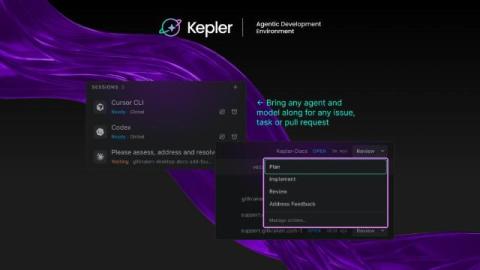
What Is an Agentic Development Environment? Kepler Is GitKraken's Answer.

Every new AI coding agent comes with the same pitch: write code faster. For most devs, that part already checks out. Codex writes a function in seconds. Claude Code refactors a file mid-meeting. Copilot fills in a test before you finish describing it. None of that touches the problem that shows up an hour later: five agents running across three repositories, each with its own diff, and no single place to see what’s stuck, what’s done, and what’s actually safe to ship.

Platform engineering in the age of AI

94% of engineering leaders say their AI metrics are missing. Here's how platform engineering is changing to close that gap. Based on the InfoQ webinar "Platform Engineering in the Age of AI," featuring panelists from Harness, DKB, and Shine, August 18, 2026. 94% of engineering leaders say the AI metrics that matter most to them are missing.

Best AI Infrastructure Providers for Power, Cooling, and Compute

AI infrastructure is becoming a facilities problem as much as a compute problem. Adding accelerators is only useful when the surrounding environment can support them. Power has to reach the rack reliably. Cooling has to remove the heat produced under sustained load. The network fabric has to keep accelerators communicating. Storage has to feed the workload. Orchestration and monitoring then determine whether expensive capacity spends its time doing useful work.

Day 2 Operations for AI-Generated Code: What Changes When You Didn't Write It

We have all watched AI speed up the way we write software. With tools like Copilot and ChatGPT, developers can spin up boilerplate, write complex functions, or draft entire micro services in minutes instead of days. It feels like magic. But there is a silent catch that we do not talk about enough: writing the code is only Day 1. The real challenge is Day 2 operations, which is everything that happens after that code is deployed.