The latest News and Information on Distributed Tracing and related technologies.
As more organizations adopt cloud-native technologies and microservices-based architectures, application troubleshooting is becoming increasingly complex. With so many moving parts in an environment that is both dynamic and distributed, it is difficult to get the full picture. Yet complete visibility is crucial in order to find and fix issues quickly — especially ones that impact the bottom line.
Grafana Tempo 1.4 has been released and features a new optional component: metrics generator, which automatically generates RED metrics and service graphs from your traces. We’re actively rolling out the metrics-generator service to our own Grafana Cloud offering and are looking for Grafana Cloud Traces customers wanting early access. If interested, you can email our support team for more details.
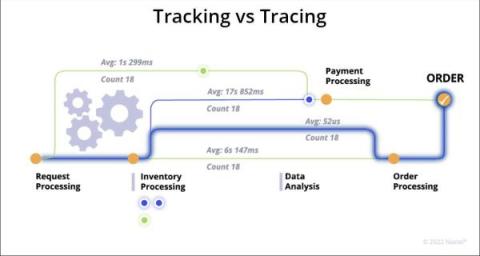
As systems get ever more complicated with more layers in the application stack, it can become more difficult to keep track of what is happening at all of the different, discrete levels and this is where distributed tracing comes into play.
When do you delete instrumentation? You delete instrumentation when you delete code. Other than that, if you’re doing things right: almost never. One of the best things about honeycomb is that it completely transforms the incentives around preserving instrumentation. With metrics-based tools, the most valuable metrics are always custom metrics. You need to define a custom metric for literally any question you might ever want to ask about the app and its utilization or performance.
Spring Boot is a very popular microservice framework that significantly simplifies web application development by providing Java developers with a platform to get started with an auto-configurable, production-grade Spring application. In this blog, we will walk through detailed steps on how you can observe a Spring Boot application, by instrumenting it with Prometheus and OpenTelementry and by collecting and correlating logs, metrics, and traces from the application in Grafana Cloud.
The management of modern software environments hinges on the three so-called “pillars of observability”: logs, metrics and traces. Each of these data sources provides crucial visibility into applications and the infrastructure hosting them. For many IT operations and site reliability engineering (SRE) teams, two of these pillars — logs and metrics — are familiar enough.
Miss O11y is delighted to welcome our newest band member: Martin Thwaites! Martin has been a member of the Honeycomb user community practically since its inception. He is a UK-based consultant who specializes in helping teams scale up and tackle challenging business problems, and a long-time contributor to the Azure and.NET communities. We think he looks ✨amazing✨ in a tiara.