Operations | Monitoring | ITSM | DevOps | Cloud

Intelligent Service Design

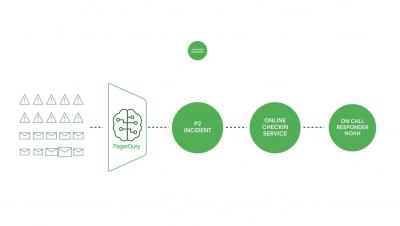
Hello and welcome to the fourth post in our EI Architecture series focusing on Intelligent Alert Grouping. Previously we have talked about how to train Intelligent Alert Grouping using incident merges (here) and how to configure your alert titles to improve default matching. In this post, we’re going to cover how service design can also impact your experience with Intelligent Alert Grouping as well as the PagerDuty app in general.

Training Intelligent Alert Grouping

We’re continuing on with our third piece about how to utilize and improve your Intelligent Alert Grouping (IAG)! In case you missed it, the first two blog posts describe the feature (here) and explain how it uses merging to group alerts (here). We alluded to today’s post at the end of last: today we’ll be discussing how to use alert titles to improve IAG matches.

Using Event Orchestration to reduce noise and trigger next best action

We often hear from customers that they’re dealing with unmanageable levels of noise and complexity, which makes it harder to pinpoint root cause and get to resolution quickly. All this effort spent on sifting through noise, processing events, and gathering context results in a lot of wasted time. That’s why we’ve launched Event Orchestration, which became generally available to our Event Intelligence and Digital Operations customers on Monday.

Event Orchestration Demo: Reduce Noise & Manage Event Routing with PagerDuty

Say hello to the next generation of event rules and cut down on manual event processing. With Event Orchestration, you can create custom logic with nested rules to enrich, modify, and control routing or trigger automation actions based on event conditions at scale. (This feature is only available to Event Intelligence and Digital Operations plans).

AWS Re:Invent 2021 - Accelerate Your Cloud Migration for Financial Services

Cloud migration and modernization projects for financial services are very complex initiatives with added challenges of visibility and incident response. He’s how we can help accelerate cloud adoption while reducing customer impact and streamlining and automating incident response.

Respond to incidents faster than ever with the New Mobile Incident Details Redesign

We’re working from anywhere, are you? With the PagerDuty mobile app, you’re always just a tap away from all the incident response tools you need. The new mobile Incident Details screen provides you with a more compelling visual experience and easier access to all your favorite features during incident response. Run a play, add a priority or note, post a status update, and more with the new carousel.

Improve Incident Response by Getting Control of Your (Unintelligent) Swarm

Incidents happen. Things go wrong. Systems fail. Sometimes they fail in unexpected and dramatic ways that create Major Incidents. PagerDuty makes a very specific distinction between an incident and an Incident. Your organization may also make such a distinction. Determining if an incident is major or not can come down to a number of factors, or a specific combination of factors, like the number of services affected, the customer impact, and the duration of the incident.

Want to accelerate your organization's digital innovation in 2022? Here's three ways to do it.

After two years of sky-high spending on cloud and related technologies, 2022 is the crunch point for corporate IT and digital leaders. Investments in technology helped facilitate the rapid shift to mass hybrid working and supported businesses to embrace the digital-first models of the new normal. But beyond merely investments to support new working styles, leaders also must ensure their organization continues to innovate.