Operations | Monitoring | ITSM | DevOps | Cloud

Golang Monitoring using OpenTelemetry

When it comes to monitoring Golang applications, there are various tools and practices you can use to gain insights into your application's performance, resource usage, and potential issues. By using OpenTelemetry for monitoring in your Go applications, you can gain valuable insights into the behavior, performance, and resource utilization of your distributed systems, allowing you to troubleshoot issues, optimize performance, and improve the overall reliability of your software.


The Evolution of Observability: From StatsD to OpenTelemetry and Beyond

Observability has evolved from simple system monitoring to a comprehensive discipline, blending metrics, logs, and traces into unified insights. Today, it is the backbone of modern infrastructure management and application performance optimization. As we move forward, the integration of AI and security into observability platforms is shaping the future, making them more proactive, intelligent, and robust.

Traditional Managed Services vs. DevOps Automation Platforms: A Comprehensive Comparison

Infrastructure management is critical for companies building and scaling applications. Traditional managed services (MSPs) handle these tasks externally but often come with high costs, slow execution, and limited flexibility. For teams needing control, speed, and efficiency, DevOps automation platforms might offer a much better alternative.

Top 6 Open-Source Jaeger Alternatives [comparison 2025]

Jaeger, a renowned distributed tracing system, has been a trusted companion for developers and operations teams seeking to unravel the complexities of microservices architectures. However, as the landscape continues to evolve, the time has come to explore Jaeger alternatives that offer distinct features and advantages.

What is a load balancer? And how does it help handle network traffic?

A load balancer, also known as Global Server Load Balancing (GSLB), is the method of splitting and distributing the incoming network traffic to multiple hosts—which can be located at different geo locations—within the organization network. This helps the network effectively manage network traffic and prevent any delays in network services. With load balancing enabled in the hosts, the organization’s network services are faster and provide more reliable responses to clients.

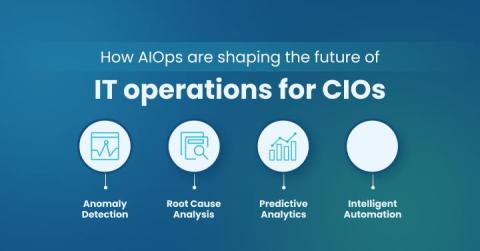
How AIOps are shaping the future of IT operations for CIOs

Having on hand actionable insights is crucial in today’s fast-changing world of technology; with digital changes and more businesses using cloud computing, companies must make sure their IT operations run smoothly. As IT systems grow more complex, old ways of managing them can’t keep up. This is where a smart AIOps solution can really make a difference.

IT Metrics & KPIs to Track Success

Imagine running an IT department without a compass—no clear way to gauge performance, spot problems, or demonstrate value to the rest of the organization. Issues are escalating unnoticed, improvements are relying on guesswork, and when someone asks, “How is IT helping the business?”—it’s tough to give a confident answer. Without IT metrics, this chaos becomes a reality. Tracking the right IT key performance indicators (IT KPIs) transforms chaos into clarity.

Importance of Remote IT Support in Dispersed Teams

Despite the headlines return to office (RTO) has been making, remote work and distributed workforces are here to stay. Case in point: a Robert Half report found that almost 9/10 workers considering a job change were interested in remote or hybrid roles1. For IT, that means solving the challenges of providing remote IT support for dispersed teams is a crucial part of the job. Getting remote IT support right takes a combination of strategy, tactics, and tools that can vary significantly from team to team.

Elevate Your Business Strategy With These 10 Financial Reporting Tools

Financial reporting tools help businesses of all sizes manage budgets, track performance, and make informed decisions. By automating repetitive tasks, they save time, reduce errors and improve accuracy. The demand for these tools is skyrocketing. In 2024, the market was valued at $14.94 billion and is expected to reach $37.56 billion by 2031. The rise of cloud-based solutions and the need for real-time financial insights are major drivers behind this growth.