Operations | Monitoring | ITSM | DevOps | Cloud

Monitor Fortinet FortiManager performance in Datadog

As enterprises scale, teams often find it harder to identify user-reported issues. Software-defined wide area networks (SD-WANs) can make it easier to add branch offices, but they can also make it more challenging to distinguish connectivity degradation from changes in application behavior. FortiManager provides a centralized control plane for Fortinet Secure SD-WAN and reduces operational complexity.

Why Upsun is the multi-cloud PaaS technical leaders are choosing in 2026

In a recent technical evaluation by Journal du Net (JDN), Upsun (formerly Platform.sh) was recognized for its ability to "pull ahead" (tire son épingle du jeu) in a fiercely competitive market dominated by cloud giants and specialized pure players. While hyperscalers offer raw power, Upsun’s strategic fusion of enterprise reliability and AI-ready agility has redefined expectations for modern PaaS.

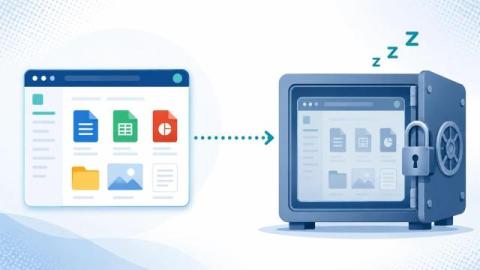
Migration blueprint for moving your application without rewriting

The decision to migrate a production application is rarely about the destination. It is about the friction of the journey. For most engineering leaders, the word "migration" is a synonym for "refactor." The industry has conditioned us to assume that moving to a modern cloud platform requires throwing away years of stable configuration, learning a new proprietary DSL, and rewriting core application logic to fit a specific container or serverless model.

Incident Alerting: What We Believe It Should Do

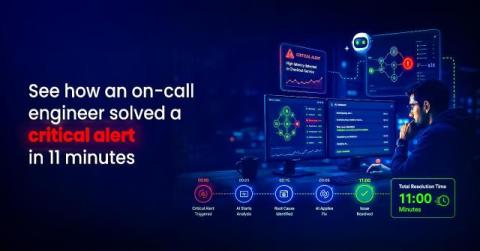
Incident alerting is a critical part of modern operations, yet it’s often misunderstood or reduced to “sending notifications.” In reality, it is about ensuring that the right people are informed at the right time – and that incidents move from detection to action without confusion or delay. This page explains why fast, reliable alerting matters, where it fits between monitoring and incident response, and what best practices look like.

How frictionless development created a trillion dollar mistake

We've all heard from an engineering leader about the exact moment they realized their architecture had gotten too complex. It usually happens when they look at a service map and realize it looks like a box of tangled Christmas lights. This cognitive overload is exactly what Steve Evans, the former SVP of engineering at Chegg, reflected on in a recent post on LinkedIn. He argued that microservices were a trillion dollar mistake because we often over-build for future problems that never actually arrive.

End-to-End Tracing with Uptrace: Follow Any Request Across Your Entire System

Stop guessing where requests slow down. With Uptrace, you can follow any request across your entire system and instantly see performance bottlenecks, errors, and latency sources. This video covers: Build real observability, not just dashboards.

Uptrace Tutorial: Dashboards, Percentiles, Heatmaps & OpenTelemetry Metrics

Learn how to use *Uptrace* to measure what truly matters in your applications using percentiles, heatmaps, and histograms—then turn that data into dashboards that answer questions before they’re even asked. In this tutorial, you’ll discover how to: Whether you’re setting up observability for the first time or replacing expensive monitoring tools, this guide shows how Uptrace helps you understand performance, reliability, and user experience — all in one place.

Uptrace Errors & Logs Tutorial: Capture Stacktraces, Context, and Traces in One Place

Every error tells a story — and Uptrace helps you see the full picture. In this tutorial, you’ll learn how to use Uptrace to capture errors, logs, stacktraces, and request context in a single observability platform. See how errors automatically link to traces, understand exactly what happened, and debug issues faster with rich attributes, user data, and performance impact. What you’ll learn: Understand not just *what broke*, but *who it affected and why* — and fix problems with confidence using Uptrace.