Operations | Monitoring | ITSM | DevOps | Cloud

Technical debt does not disappear

Cloud is currently seen by some of the clients I speak with, as the answer to associated technical debt. Technical debt is like any other debt – growing year-on-year, month-by-month. Simply relocating a workload from your dated compute stack to someone else’s system or service is not a panacea to every business-led postponement.

Why it makes sense to invest in a hybrid cloud future

A cloud-first strategy is increasingly seen as the standard way to achieve efficient business operations. As the favoured approach of new start-ups and expanding businesses wanting to benefit from the flexibility and resilience of the cloud, it’s little wonder that foundational cloud services saw a revenue growth of 38.5% in 2021 according to IDC. It looks like a fantastic package from the outside.

Cloud vs Data Center: Overview for Businesses

The debate of cloud vs data center looms large for businesses when determining how to best store data. In past years, the trend has leaned more toward the growth of remote solutions using the cloud. Yet, data centers are still relevant. Gartner states that spending on data center infrastructure is expected to grow 6% by the end of 2021. Cloud storage and data centers both possess unique features that allow you to achieve your organization’s data goals.

Why Hyperscale Data Centres Are Becoming More Important for Your Business

As the world propels forward into the digital age, organisations start to rely more and more on technology to organise and store their data. And with the proliferation of cloud computing and big data, businesses that are keen on dominating their landscape are turning to hyperscale data centre services to scale at an unprecedented level.

How to Manage Your Data Center During a Heatwave

The recent heatwave that brought record temperatures to the UK caused cooling systems to fail at a London data center resulting in downtime for Google and Oracle. According to Oracle, “Following unseasonably high temperatures in the UK south (London) region, two cooler units in the data centre experienced a failure when they were required to operate above their design limits.

Hyperview DCIM 3.6 Software Release

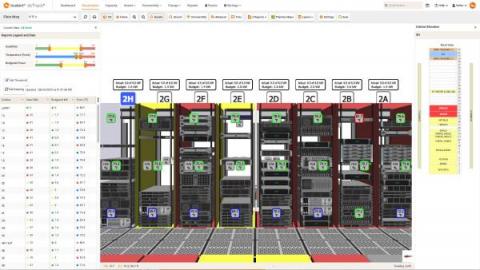
ServiceNow CMDB integration is now available! As well, we continue to roll out enhancements to Firmware Management and 3D view. Now you can view, search and report on the current firmware version for all your assets, both Managed and Unmanaged. In 3D view, you can quickly hone in on a specific set of racks or assets using Focus Mode. Plus, Hyperview now generates a multi-level Heat Map for more nuanced temperature ranges.

6 Best Practices to Create a Data Center Naming Convention

Naming conventions for assets have a rich, engaging, and often hilarious history. While recently organizations have switched to standardized and more informative naming conventions based on location and function, earlier (and even now) IT departments have had a lot of fun naming assets for their data centers and servers. IT departments have often showcased their inner geek by using names of Star Wars or Star Trek characters for their assets.

Data Center Analytics: Top KPIs Chosen by Experts

Today’s data centers generate a lot of data. Intelligent rack PDUs and other metered power infrastructure, environmental sensors, and the constant change in modern data centers all contribute towards a massive volume and variety of data. But data center professionals don’t have the time to collect all the data from its sources, analyze it, and derive insights from it that improve their data center operations.

Rack Diagrams: Why You're Doing Them Wrong

Rack diagrams, also known as rack elevations, are visual representations of the IT equipment in a server rack. They are used to track and manage what assets are in each rack and which U position they are in. Rack diagrams are very useful and commonly used for data center asset management and capacity planning. The information rack diagrams provide allow you to know what equipment you have, where you have space to deploy more, and can improve the troubleshooting process.