Operations | Monitoring | ITSM | DevOps | Cloud

What to Do if Technology is Failing Your Business Operations

You might have your head screwed on as a business owner. You might be able to lead your team successfully and make financially astute business decisions. However, nowadays, you are not alone when you are running your business. Instead, technology is your co-leader. Although this can come with many advantages, it can also bring its own difficulties to the equation. Here is what you should do if technology is failing you and your company's operations.

What is Automated Patch Management?

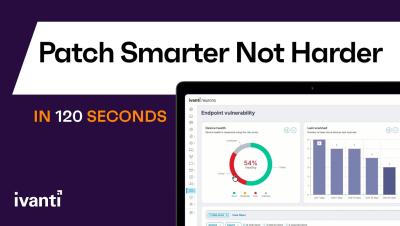
Learn why manual patch management creates unnecessary risk for IT teams and how automated patch management helps organizations improve security, compliance, and operational efficiency. Discover how automation eliminates repetitive tasks, reduces human error, prioritizes critical vulnerabilities, and accelerates patch deployment across the entire IT environment.

A New Approach to Mac Patch Management

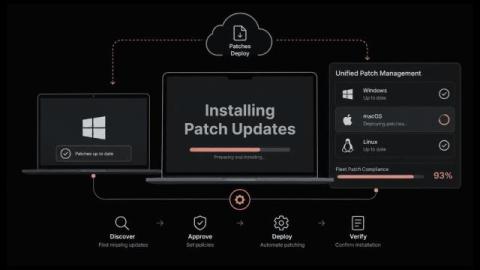
Managing macOS patching shouldn’t mean juggling tools, chasing failures, or leaving endpoints exposed. In this webinar, N‑able experts share a new approach to Mac patch management that brings visibility, consistency, and control into a single workflow. Join our product and engineering specialists as they walk through how modern patching is evolving beyond isolated updates into a unified endpoint remediation strategy. You’ll see how patching and vulnerability management are being brought closer together, helping you detect risks, prioritise actions, and remediate with confidence.

Patch Management vs Vulnerability Management: What are Key Differences?

What keeps systems secure in real IT environments, applying fixes quickly or knowing what needs attention first? Most IT teams do not struggle because they lack tools or processes. They struggle because two critical functions are often mixed together. Patch management and vulnerability management. This creates a gap between what is being fixed and what actually needs to be fixed. The challenge is that teams deal with constant alerts, regular updates, and growing security risks.

Never Miss a Device: Achieving Continuous Patch Compliance in an Era of Persistent Threats

Does your organization achieve 95% or greater patch deployment success, as demanded by SLAs and regulatory frameworks? Odds are you don't, as most organizations only hit the 90% mark due to common issue: Devices that miss scheduled maintenance windows leave IT teams like yours scrambling to manually, reactively close compliance gaps.

What is Patch Management and Why is It Important? A Complete Guide

Patch management is one of the cheapest security steps you can take, and one of the most often ignored. Most IT teams know they are behind on patching. They just disagree on how far behind they actually are. Here is the simple truth: That waiting period is the problem patch management exists to solve. This guide covers what patch management actually is, how the full process runs from start to finish, where most teams quietly fall behind, and what to look for in a tool that holds up today.

We're in a Patch Apocalypse. That Means These Three IT Excuses Won't Work Anymore.

On April 7, Anthropic announced that its Claude Mythos Preview model had autonomously identified thousands of high- and critical-severity zero-day vulnerabilities across every major operating system and every major web browser. Over 99% of them were unpatched the day of disclosure. Two weeks later, on April 21, Mozilla said it had used the same model to find and patch 271 vulnerabilities in the latest Firefox release.

No more monkey-patching: Better observability with tracing channels

Almost every production application uses a number of different tools and libraries,whether that’s a library to communicate with a database, a cache, or frameworks like Nest.js or Nitro. To be able to observe what’s going on in production, application developers reach out for Application Performance Monitoring (APM) tools like Sentry. But there’s an inherent problem: the performance data that APM tools need is most often not coming natively from the libraries themselves.

How AI-Driven Automation Solves Patch Management Silos

"We see 10,000 critical vulnerabilities!" "We patched everything last week!" This conversation happens in enterprise IT departments every single day. Security teams present dashboards filled with red alerts. IT teams show deployment reports at 98% success. Both teams are looking at real data. Both are absolutely correct. And both are totally blind to what's actually happening across the endpoint environment. This isn't a people problem — your teams aren't incompetent.