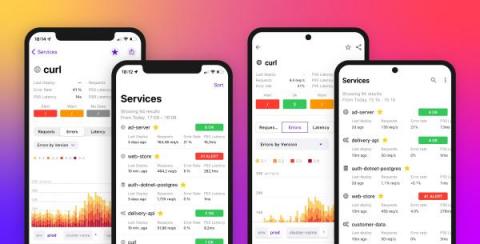
In June, we hosted our online meetup with ContainIQ surrounding k8s monitoring and observability. You can catch up on the discussion between Matthew Lenhard (Co-founder & CTO of ContainIQ) and Kai Hoffman (Developer Advocate at Civo) here if you missed it. Meanwhile, Kamesh Sampath from our Developer Advocate demo program explains how Civo’s speed and developer experience is great to work with in our latest Civo Shorts.
When I speak at conferences, I often fall back to the fact that just a couple of decades ago we’d observe production by kicking the server. This is obviously no longer practical. We can’t see our production. It’s an amorphous cloud that we can’t touch or feel. A power that we read about but don’t fully grasp. In this case, we have physical evidence that the cloud is there. A part of this major shift in our industry is a change to our fundamental roles as engineers.
We live in a world where 83% of security professionals believe that employees have accidentally exposed customer or business-sensitive data at their organization via email (Business Wire). This sheds light on a great vulnerability faced by MSPs and internal IT businesses worldwide: once you share critical information with your end users, that data is no longer in your hands, hence your security does not extend to it anymore. If only there was a way to prevent that! Luckily, there is.
RabbitMQ is an open source server that was created to support the AMQP 0.9.1 messaging protocol. It now supports other protocols as well, including MQTT 3.1.1, but AMQP 0.9.1 is its core method. So here we will compare AMQP 0.9.1 with MQTT. MQTT was designed for the Internet of Things (although it wasn’t called that at the time). Both MQTT and AMQP run over TCP connections, both are client-server in architecture and bi-directional.
Azure Functions is an on-demand serverless compute offering built on top of Azure App Service that enables you to deploy event-driven code without the need to provision and manage infrastructure. Because applications rely on Azure Functions to handle business-critical tasks such as processing orders or logging in users, it’s important to ensure that your functions respond quickly when they’re invoked.
As remote working culture becomes more prevalent, technology is now at the core of many business operations, and digital experience monitoring (DEM) has never been more important. In today's business, IT must help increase employee productivity and drive business growth rather than just solve problems at the support desk. Many companies have not yet fully implemented their digital experience strategy. As a result, many problems related to different devices, network conditions, and service providers are still plaguing the industry and ruining the employee experience.