As we bid farewell to 2023, it’s once again time to reflect on the milestones and progress we’ve made throughout the year. This year is especially significant because it marks 30 years since CFEngine’s birth. From its humble beginnings at the University of Oslo to the thousands of implementations across the world and counting, CFEngine has not only weathered the twists and turns of life, but has thrived in an industry where many have come and gone.
Today, we are pleased to announce the release of CFEngine 3.23.0! This is a non-LTS (non-supported) release, where we introduce new features for users to test and give feedback on, allowing us to polish before the next LTS.(CFEngine 3.24 LTS is scheduled to release summer 2024). The codename for this release is anniversary, as this year is CFEngine’s 30th anniversary.
For CFEngine we manage several public and private repositories of code in GitHub for our Open Source and Enterprise products. In order to ensure quality we run many checks on the code both with nightly builds as well as on each pull request. We use a Jenkins server for nightlies which also includes more extensive deployment tests on all of the platforms we support. Previously we had used Travis for many of these checks but that system started to show its age and limitations.
This question was covered in The Agent is In, Episode 27 CFEngine Q&A: Policy Questions. Given the following JSON, how can I get a list containing just the values of name?
This question was covered in The Agent is In, Episode 27 CFEngine Q&A: Policy Questions. Testing is an important part of the software life-cycle. Writing tests for your CFEngine policy can help to bring improved assurance that your policy behaves as expected. Follow along and write your first test policy.
Today, we are pleased to announce the release of CFEngine 3.22.0! The focus of this new version has been coordination. This is a non-LTS (non-supported) release, where we introduce new features for users to test and give feedback on, allowing us to polish before the next LTS.(CFEngine 3.24 LTS is scheduled to release summer 2024).
Traditionally, CFEngine policy sets are managed as a whole. When upgrading the Masterfiles Policy Framework (MPF)1 users must download the new version of the policy framework and integrate it into the existing policy set, carefully diffing the vendored policy files against their currently integrated policy. Updates to policy authored by others must be sought out and similarly integrated.
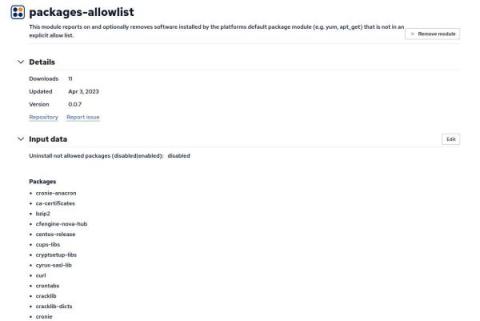
Having a list of software that is allowed to be installed on a host is a strategy to prevent and fix security gaps and maintain compliance with operational guidelines. This zero-trust methodology ensures that only explicitly permitted applications are allowed to be present on a host unlike package block-listing which enumerates an explicit list of software that is not allowed to be present. In fact, with a software allow-list, you are essentially block-listing everything except the software you allow.
Opening and reading files may cause your program to block indefinitely, which is a major problem for configuration management tools like CFEngine. What if we make a program that can check if these file operations would block indefinitely, before using them? Unfortunately our good friend Alan Turing proved that such programs are not theoretically possible.