Operations | Monitoring | ITSM | DevOps | Cloud

Dashboard Playlists: Cycle Through Dashboards in TV Mode

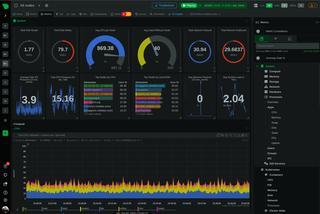
When we shipped TV mode, we heard almost immediately: “Great, but I have five dashboards and one screen.” A single dashboard on a wall display covers one view of your infrastructure. If you want to rotate between your network overview, database health, application metrics, and infrastructure summary, someone has to walk over and click, or you’re buying more screens. Dashboard playlists solve this.

Monitoring Your Azure to Azure Local Migration: One Dashboard for Both Sides

More organizations are moving workloads from Azure public cloud to Azure Local (formerly Azure Stack HCI) than most people realize. The reasons vary: data sovereignty requirements, latency-sensitive workloads that need to be closer to the edge, cost optimization for predictable workloads where reserved cloud capacity doesn’t make financial sense, or regulatory constraints that require data to stay on-premises.

Geo Maps: See Where Your Infrastructure Lives

When your infrastructure is spread across regions, data centers, branch offices, or edge locations, knowing where a node is physically located matters more than people usually admit. During an incident, “the node in the Singapore POP” communicates faster than a hostname. When you’re planning capacity, seeing geographic clustering tells you something that a flat list of nodes doesn’t.

NVIDIA DCGM Collector: Deep GPU Monitoring for Data Center and AI Infrastructure

GPU infrastructure is expensive and increasingly central to production workloads. Whether you’re running ML training jobs, inference serving, video transcoding, or HPC workloads, understanding what your GPUs are actually doing, and what’s going wrong when performance degrades, is not optional.

Misconfigured Alert Detection: Find the Alerts That Need Tuning

Netdata ships with hundreds of stock alerts. They cover a wide range of infrastructure conditions and they’re designed with sensible defaults. But “sensible defaults” and “correct for your environment” are not the same thing. A CPU threshold that’s perfectly reasonable for a build server might generate constant noise on a machine running batch jobs.

Azure Monitor Collector: Monitor Your Entire Azure Infrastructure From Netdata

If you’re running infrastructure on Azure, you’ve probably dealt with the split between your Azure-native monitoring and the rest of your stack. Your VMs, databases, and Kubernetes clusters generate platform metrics through Azure Monitor, but those metrics live in a separate world from the OS-level, application, and on-prem metrics you’re already watching in Netdata.

Database Performance Monitoring: Query-Level Visibility Across 14+ Databases

Netdata has always collected database metrics: connections, throughput, replication lag, buffer cache hit ratios, and so on. These tell you that something is wrong, but they don’t tell you why. When your PostgreSQL response time spikes, the metric alone doesn’t tell you which query is responsible. For that, you’ve traditionally needed to SSH into the box, connect to the database, and run diagnostic queries manually. Or set up a separate database monitoring tool entirely.

Nagios Plugins Collector: Run Your Existing Checks and Custom Scripts Inside Netdata

A lot of teams have a collection of Nagios plugins and custom monitoring scripts that have been running reliably for years. Some are standard community plugins for checking disk health or SSL certificate expiry. Others are homegrown Bash or Python scripts that check something very specific to the business: whether an API endpoint returns the right payload, whether a batch job completed on time, whether a queue depth is within bounds.

Secrets Management: Get Credentials Out of Your Netdata Configuration Files

If you’re running Netdata collectors that connect to databases, APIs, or other authenticated services, there’s a good chance you have passwords sitting in plain-text configuration files right now. It works, but it’s the kind of thing that makes security teams nervous and makes credential rotation painful. Every password change means editing config files and restarting collectors.

Smarter Alert Management: Test on Historical Data, Review Transitions, and Preview Silencing Schedules

Alert fatigue usually isn’t caused by one thing. It’s the accumulation of thresholds that are slightly too sensitive, alerts that fire during known maintenance windows, and historical patterns that nobody has the tools to review easily. Fixing it requires better visibility into how alerts actually behave over time, and a way to test changes before they hit production. We’ve shipped three improvements to alerting in Netdata that address different parts of this problem.