Operations | Monitoring | ITSM | DevOps | Cloud

Unified Endpoint Management Strategy Complete Guide

Unified endpoint management is a growing market, and IDC predicts it will grow from $3.4 billion in 2019 up to $4.9 billion in 2024. This market growth is due to a variety of factors such as the Bring Your Own Device (BYOD), Choose Your Own Device (CYOD), and Internet of Things (IoT) trends. Data security is also a growing concern and the number of devices continues to increase each year, plus there is a high volume of data sharing across these organizational devices.

Configuring Your DNS Server: A Step-by-Step Guide

The Domain Name System (DNS) is the backbone of the internet. Proper DNS configuration is essential for seamless internet connectivity and plays a central role in enhancing website performance. In this guide, we will explore DNS configuration and its importance and provide step-by-step instructions for configuring DNS servers on various platforms, as well as client settings.

NinjaOne Fall 2023 Release (5.5) - SentinelOne Integration, MDM and Reporting Redesign

We’re happy to announce that our Fall 2023 Release (5.5) is rolling out to all regions during the month of October. With a time-saving new integration with SentinelOne, greatly enhanced reporting capabilities and more visibility into critical vulnerabilities this release offers more security, flexibility, and convenience to our customers.

A Comprehensive Guide to Software Configuration Management

In the ever-evolving landscape of software development, the need for a structured and efficient management system is paramount. Software configuration management (SCM) serves as the backbone for managing changes and maintaining the integrity of software products. For managed service providers (MSPs) and their clients, SCM is not just a best practice - it's a necessity.

Choosing the Right Software Deployment Tool: Intune vs. NinjaOne - A User's Perspective

Software deployment is an essential yet sometimes complex process for IT administrators, aiming to ensure applications are installed, updated, and managed efficiently across a network. Simplifying this procedure, especially with varied file formats like MSI and EXE, becomes crucial to save time and reduce potential headaches. Two software deployment tools, Microsoft’s Intune and NinjaOne, provide options to manage this but offer different user experiences.

What Is the True Cost of Downtime for Businesses?

The financial and operational ramifications of downtime have become increasingly pronounced over the past seven years. In 2014, Gartner predicted that downtime costs organizations an average of $300,000 per hour. However, recent statistics lie in sharp contrast to this 6-figure estimate, with 44% of organizations now counting their hourly downtime costs at over $1 million - exclusive of the ensuing penalties or legal fees.

In-Office vs. Remote Employees: What's the Right Choice for Businesses?

Once upon a time, employment dictated where you lived. This widespread understanding led to a networking effect that amplified the appeal of cities. Cities, in turn, attracted skilled individuals, providing companies with a compelling incentive to establish a presence there and thereby draw even more talent. Notable locales like New York, Los Angeles, and Silicon Valley emerged as epicenters for high-caliber talent and the organizations that employed them.

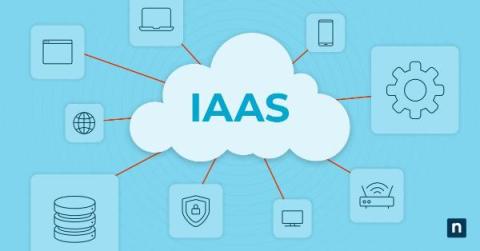
Infrastructure as a Service (IaaS): What It Is, And Why You Need to Know

In the ever-evolving landscape of cloud adoption, resource virtualization has emerged as a transformative force, revolutionizing the way businesses operate and offer services. At the heart of this revolution lies the concept of Infrastructure as a Service (IaaS), which offers a spectrum of service models designed to meet the diverse needs of every company.

Application Patching: How To Patch Third-Party Applications

The applications we rely on extend well beyond the core systems provided by our primary software vendors, as our technological infrastructure is often interlaced with third-party applications. While these tools bring immense functionality and convenience, they also come with their own set of vulnerabilities. Third-party application patching is the unsung hero that ensures our external software tools remain secure, up-to-date, and optimized.