Operations | Monitoring | ITSM | DevOps | Cloud

JBS Adopts a Monitoring and Operation Platform Compatible with Microsoft Azure for Its Managed System Service and Renews JBS Original Services With Cloud and Hybrid Environment Strengths

(Head Office: Minato-ku, Tokyo; Representative: Yukihiro Makita, President; hereinafter “JBS”) has adopted OpsRamp, an operation platform suitable for Microsoft’s cloud services as an operation platform for its enterprise outsourcing service, the MATRIX for Managed System Services, and renewed its services on January 29, 2019.


OpsRamp March 2019 Update: Incident Management and Multi-Cloud, Serverless Monitoring for Better Uptime and Faster Recovery

Last month OpsRamp delivered our Winter release, which introduced several innovations for digital operations management, including: Impact Visibility and Service Context, AIOps for Proactive IT Operations, Cloud Native Monitoring and Event Management

451 Research's Market Map Recognition, Big50's Hot Startup to Watch, and Why Service-Centric AIOps is your Best Bet Today

February has been a great month of industry recognition with our inclusion in 451 Research’s Market Map for Application and Infrastructure Performance and Startup50.com naming us a “Hot Startup to Watch.” To access recent OpsRamp coverage, be sure to visit our newsroom.

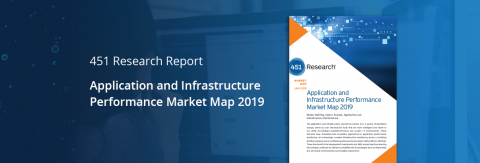
OpsRamp Gains Ground in 451 Research's 2019 Market Map for Application and Infrastructure Performance

We’re thrilled to announce that for the second year in a row, 451 Research has positioned OpsRamp in their flagship Market Map report for Application and Infrastructure Performance. 451 Research recognized OpsRamp for its innovative use cases in four distinct performance management categories: Infrastructure Monitoring, Event Analytics, Alerting, and Synthetics. You can read an excerpt of the 2019 Market Map report HERE.

Making The Most Out of Your Performance Monitoring Investments in 2019

Our recent webinar on 2019 Performance and Management Trends and Insights featured Nancy Gohring, Senior Analyst at 451 Research and Darren Cunningham, VP of Marketing at OpsRamp. The webinar reviewed key findings from recent surveys on performance monitoring and how IT automation investments (artificial intelligence and machine learning) are helping enterprises combat the twin problems of alert fatigue and incident downtime.

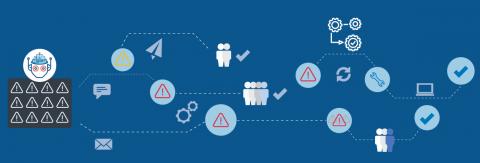
Reduce Incident Downtime and Fix Outages Sooner with Policy-Based Alert Escalation Management

Proactive Incident Analysis, Diagnosis, and Resolution with Service-Centric AIOps. Alerts define the state of an infrastructure resource, application, or any other IP discoverable device. Organizations take action on alerts based on business impact and priority and ensure that IT service performance meets the required standards for availability, usability, and security.

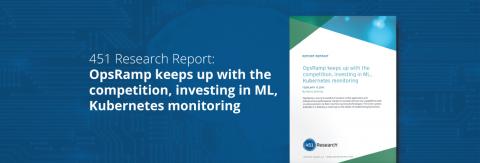
451 Research: OpsRamp Expands The Breadth and Depth Of Its Service-Centric AIOps Platform

OpsRamp was recently featured in the 451 Research Impact report, OpsRamp Keeps Up With The Competition, Investing in ML, Kubernetes Monitoring. This report, written by Nancy Gohring, 451 Research’s senior analyst for Application and Infrastructure Performance, demonstrates how OpsRamp is one of the few vendors that has organically built and delivered a transformational SaaS solution for modern IT operations, DevOps, and Site Reliability Engineering teams.

Four Reasons Why Service-Centric AIOps Is A Better Bet Than Your Average AIOps Point Tool

By 2022, Gartner predicts that 40% of large enterprises will adopt AIOps solutions to cope with never-ending alert floods and ensure faster recovery from disruptive IT outages. The AIOps market is experiencing rapid growth with explosive enterprise adoption, accelerated revenue growth and continued investments from IT operations players.

5 Trends Transforming Digital and IT Operations Management

In 2018, digital transformation ushered in a radical shift in how enterprises harness customer insights, technology capabilities, and rapid experimentation to drive revenue growth, profitability, and market leadership. Enterprises spent $1.3 trillion in 2018 on digital transformation technologies like public cloud platforms, microservices and containers, edge computing, machine learning, and artificial intelligence to improve customer experiences, business agility, and employee engagement.