Operations | Monitoring | ITSM | DevOps | Cloud

Defining and measuring your SLIs and SLOs

Customers expect that online services are available all the time. The truth is that outages happen to almost everyone because providing 100% service availability is challenging and costly. Creating reliable and profitable service is, amongst other things, finding the balance between application availability, costs and time to market. Faster feature delivery means less availability as constant changes to production may cause issues and introduce bugs.
Monitoring and Debugging Python Apps on AWS Lambda

As a developer, Python for me is a heavy-lifting and versatile language. I’ve used it for building APIs, internet of things projects, file and data conversions, machine learning and (of course) web development. Like with any modern, commonly used language, the functionality behind the application is only as good as the infrastructure that it is deployed onto.

Tracing and Observing AWS ECS

It’s no secret that application containerization has revolutionized the digital world as we know it by providing a transient gateway into elastic infrastructure that can scale and grow as needed. Where traditional virtualization was all about creating a single homogenous entity, containers are self-contained units of software, able to run in just about any environment, making them extremely portable.

Get the Most Out of Serverless for Fleet Management Apps

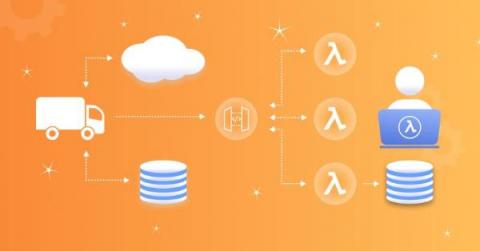
You’ve probably seen Rush Hour, a logic puzzle where you have to slide cars and trucks out of the way to steer the red car towards the exit. In real life, when your customers are responsible for tracking hundreds or thousands of data points from dozens of valuable, mission-critical sensors, you’re tracking engine speed, network signal level, distance from the RF, and more—and not just through traffic but across continents.

Shine Some Light on Your SNS to SQS to Lambda Stack

The combination of SNS to SQS to Lambda is a common sight in serverless applications on AWS. Perhaps triggered by messages from an API function. This architecture is great for improving UX by offloading slow, asynchronous tasks so the API can stay responsive. It presents an interesting challenge for observability, however. Because observability tools are not able to trace invocations through this combination end-to-end. In X-Ray, for example, the trace would stop at SNS.

Advanced Debugging and Monitoring for Serverless Backends

Serverless backends have different monitoring challenges when compared with traditional applications, mostly due to the distributed and proprietary nature of serverless. Making monitoring and debugging efficient for serverless requires a unique set of tools and techniques. In this article, we’ll discuss the challenges of debugging serverless backends and how to utilize third party tools to improve the monitoring process.

Seven Tools to Help You Become a Better Serverless Developer

Serverless technologies let us do more with less effort, time and energy. They let us focus on creating user value and let the cloud handle undifferentiated heavy-lifting like scaling and securing the underlying infrastructure that runs our code. Serverless technologies have allowed me to accomplish tasks as a solo engineer that used to take a whole team of engineers to accomplish, and I’m able to complete these tasks in a fraction of the time and cost to my customers.

Top Tips for NodeJS and Debugging on AWS Lambda (Part 2)

This is the second post in a 2 part blog series on debugging, monitoring and tracing NodeJS Lambda applications. If you haven’t yet seen part 1, check it out here (it’s a great read!) Now let’s get back into our post with one of the most commonly experienced issues when it comes to Lambda functions, Cold Starts.

Top Tips for NodeJS Tracing and Debugging on AWS Lambda (Part 1)

In this two post series, we are going to explore some ways to trace and debug NodeJS Lambda applications. Delving into some methods to look further into resources utilized to and some methods to optimize code. AWS Lambda, an event-driven compute service first introduced roughly eight years ago, changed how we build out cloud applications as an industry.

Four Ways to Run Containers on AWS

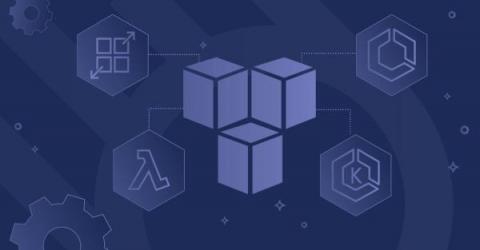
AWS provides multiple ways to deploy containerized applications. From small, ready-made WordPress instances on Lightsail, to managed Kubernetes clusters running hundreds of instances across multiple availability zones. When deciding on the architecture of your application, you should consider building it serverless. Being free from (virtual) server management enables you to focus more on your unique business logic while reducing your operational costs and increasing your speed to market.