Operations | Monitoring | ITSM | DevOps | Cloud

Are AI Coding Agents the New CI Bottleneck?

AI coding agents are moving the software bottleneck from writing code to validating it. Here’s what that means for CI infrastructure, capacity planning, and software quality. This topic is explored in more detail in “CI Can’t Keep Up With AI,” an episode of Uplink, where Aditya “JP” Jayaprakash, Co-founder and CEO of Blacksmith, discusses how AI coding agents are reshaping CI and software delivery. Table of Contents.

Redgate Monitor's Product Updates - August 2026

This month, we wanted to spotlight some of the new cloud features that shipped last month and are enabling teams to keep pace with database estates that increasingly span multiple platforms and providers. We also have updates for Monitor Enterprise users that improve alerting for permission changes. Here's what's new in Monitor.

8 Best Vulnerability Management Tools for Scanning, Prioritizing and Patching

A vulnerability scanner will hand you more work in one afternoon than the service desk can clear in a quarter. Thousands of findings arrive ranked by severity, every one of them technically actionable. Fixing them takes weeks, and in most organizations the backlog grows faster than it clears. That gap is what this guide is about. Every tool here scans reliably, scores findings sensibly and reports clearly.

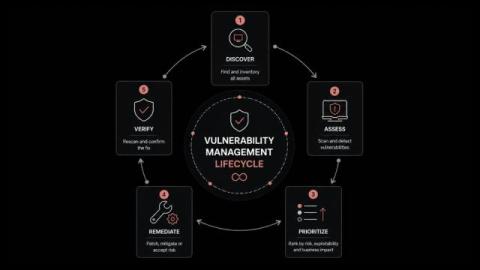
How the Vulnerability Management Lifecycle Runs from Discovery to Verified Fix

Who in your organization can say, without opening three separate systems, whether last month's critical findings are actually closed? A deployment record answers half of that. The other half needs a rescan, and the rescan often never happens. The vulnerability management lifecycle is that question written down as a repeatable process. It runs from knowing what you own through to proving a fix landed, and it restarts the moment it closes.

Kubernetes GPU Scheduling for MLOps and GPU Sharing

The default Kubernetes scheduler was built for stateless services: web servers, APIs, databases. It schedules a pod, checks that a node has enough of whatever resources were requested, and binds it. For CPU and memory, that model works fine. For GPUs, it falls apart in three specific ways. First, GPUs are treated as an opaque integer resource.

An Agent Is Only as Good as the Baseline It Reasons Against

Every vendor in networking has an agent story right now. The useful question for an operations leader is which of those agents can plan, act, and verify against a trustworthy model of the network, and which are assistants that retrieve and suggest, then leave the decision to a person. The direction of travel is settled.

The Future of Enterprise Messaging: What 2026-2030 Holds

Enterprise messaging is not a solved problem sitting still. The last five years have reshaped the technology landscape in ways that are still working their way through enterprise architecture decisions: Kafka's dominance in event streaming, the rise of cloud-native managed messaging (Amazon MQ, Azure Service Bus, Confluent Cloud), the democratization of the Kafka protocol across competing implementations, and now the early emergence of agentic AI as a new category of messaging consumer.

Optimising IT Operations for Property Management Platforms

The property management industry has undergone a significant transformation, moving from paper-based ledgers and phone calls to sophisticated digital platforms. This shift places immense pressure on IT operations teams to ensure these platforms are reliable, secure and efficient. For modern property management to function effectively, the underlying technology must be reliable and consistently perform well.

A Founder's Guide to Reddit Market Research Before Launching a Product

CB Insights' original, widely cited analysis of startup post-mortems found that "no market need" was the single most common cause of failure, showing up in 42% of the cases studied. Read together, the two studies - a decade apart, different sample sizes - land on the same conclusion: the most common startup failure isn't a funding problem or an execution problem. It's building something before confirming anyone urgently needed it.