Operations | Monitoring | ITSM | DevOps | Cloud

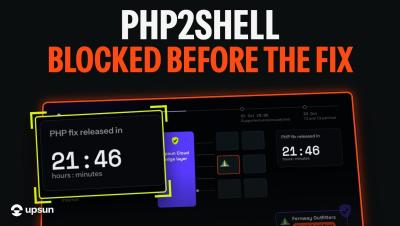
PHP2Shell explained: blocked 22 hours before the patch existed

PHP2Shell let attackers run code on PHP servers without logging in, and updating a CMS or its plugins didn't help. Only a new version of PHP fixed it. In this explainer, we break down how the two flaws work (CVE-2026-109618 and CVE-2026-109619, both rated 9.2 critical) and what Upsun Cloud did between PHP's one-day warning and the fix. We get into.

Can Observability Reduce Your Tech Debt? | Live Laugh Logs Ep. 5 with Wilco Burggraaf

Your telemetry data can reduce engineering complexity AND make your software more sustainable - find out how in this episode! Welcome to Episode 5 of Live Laugh Logs, the podcast from the Coralogix Developer Relations team. This week, Annie is joined by Wilco Burggraaf, Principal Lead at HighTech Innovators and host of the Sustainable IT Action Netherlands meetup.

Keynote: Cloud Networking for AI Architectures | Roy Chua | Megaport Connect 2026

AI is changing how networks are designed and operated. This session explores how GPU infrastructure, AI workloads, and automation are reshaping enterprise and cloud networking, and what these shifts mean for network architecture and the future role of network engineers. Recorded at Megaport Connect 2026. Chicago | Thursday 22 October ABOUT THE SPEAKER | Roy Chua, Founder and Principal, AvidThink.

Ship SecOps changes like software: Modernizing the SOC without breaking what works

Cribl gives security teams control over their data: what they collect, where to send it and how much to keep. The rest of the SecOps stack hasn’t kept pace. Detections, parsers and configurations spread across SIEMs, pipelines and data lakes still change by hand, so every cost cut, migration or new source turns into weeks of manual validation, and plenty of planned changes never happen at all. SecOps as Code closes that gap: every change ships like software, with testing, version control and rollback across the entire infrastructure.

Application Metric or Log? Which should you use?

Sentry offers both "Application Metrics" and "Logs", but both can seem pretty similar. Both logs and metrics are just a collection of attributes attached to a name in your code. Both can be counted, visualized, or alerted on. Both are not sampled by default. So how do you know which to choose? In this video, we'll briefly go over a few examples of when to use logs and when to use metrics. TLDR; Logs are designed for debugging and may be temporary or likely to change when problems arise. Metrics on the other hand are stable, purposely placed events used to track user behaviors.

Cloud Networking 101 | Holly Podbielak | Megaport Connect 2026

Cloud has transformed networking. This session explores the fundamentals of cloud networking, including software-defined infrastructure, automation, APIs, infrastructure as code, and cloud connectivity, providing a practical foundation for modern network engineers. Recorded at Megaport Connect 2026. Chicago | Thursday 22 October ABOUT THE SPEAKER | Holly Podbielak, Solutions Consultant, Palo Alto Networks.