Every year during the holidays, our customer, a multinational professional services organization, has thousands of IT tickets built up due to employees on vacation. As the IT teams reached out and didn’t receive a response, their performance metrics ticked up, impacting their quarterly goals and customer satisfaction. In defense of these employees, we all know what it is like to come back to an overflowing inbox.
According to CEOs of Intel, IBM, Cisco & other major tech companies, the current semiconductor chip shortage will impact price and availability of IT hardware for the next 12 to 18 months. News coverage about the shortage reveals many factors impacting the production crunch, but there is one common underlying issue – many IT departments are updating their asset plans now based on unknown conditions (which I’ll make ‘known’ at the end of this article 😊).
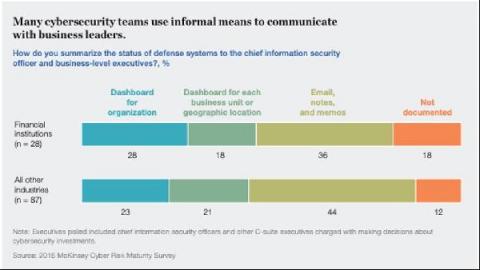
Defending against security threats is a full-time job. The question is: Whose job is it? Our cybersecurity landscape is in constant flux, with more users having increased access to corporate data, assets, APIs, and other entry points into the organization.
Most people wouldn’t consider order management the most exciting part of business, but perhaps they should. For Deutsche Telekom, order management sits at the very heart of our business operations. It’s the activation point, the moment when things start to get real. Done badly, it can create disparate silos, inefficient orchestration, slow delivery times, high costs, and a poor customer experience. We don’t want that.
How a network’s IP address space is structured, scanned, and managed differs based on the organization’s size and networking needs. The bigger your network is, the more IPs you need to manage, and the more complex your IP address hierarchy gets. As a result, issues such as IP resource overutilization and address conflicts become challenging to avoid without an IP address management (IPAM) solution in place.
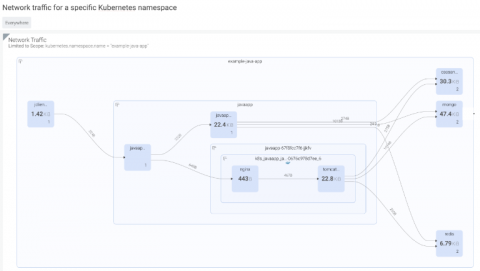
In this blog, we will cover the various requirements you need to meet to achieve NIST 800-53 compliance, as well as how Sysdig Secure can help you continuously validate NIST 800-53 requirements for containers and Kubernetes. NIST 800-53 rev4 is deprecated since 23 September 2021 Read about the differences between versions down below →
On June 2, 2019, Google Cloud Platform had a major network outage that disrupted the services of Discord, Spotify, and Snapchat, among many others. The root cause was a benign misconfiguration coupled with a software bug that caused the loss of configuration data. The issue was resolved almost four hours later after the lost configuration data was rebuilt and redistributed.
AWS CloudWatch is a service that allows you to monitor and manage deployed applications and resources within your AWS account and region. It contains tools that help you process and use logs from various AWS services to understand, troubleshoot, and optimize deployed services. I’m going to show you how to get an email when your Lambda logs over a certain number of events.