Operations | Monitoring | ITSM | DevOps | Cloud

Claude outage April 2026: what happened and how it was detected early

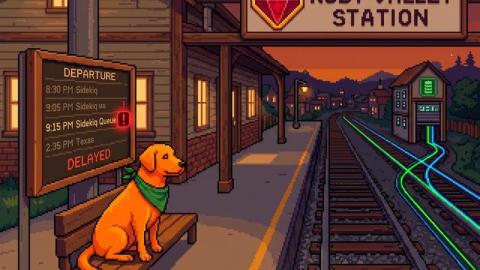
On April 9, 2026, Claude experienced a widespread but inconsistent outage that left many users unable to access or interact with the service. StatusGator detected the issue early and sent an Early Warning Signal 59 minutes before the provider officially acknowledged the outage. This incident highlights how early detection can provide critical lead time when official status pages lag behind real user impact.

What Is Snowflake? A Beginner-Friendly Guide

Imagine if you had a magic box where you could keep all your business information — sales numbers, customer feedback, everything — safe and sound, but also easy to look at whenever you needed. That’s kind of what Snowflake does, but for big organizations and using the cloud. It’s a new way for companies to store and use their data without getting bogged down by the techy details.

In the Age of AI, Operational Memory Matters Most During Incidents

Artificial intelligence is making software easier to produce. That much is already obvious. Code that once took hours to scaffold can now be drafted in minutes. Boilerplate, integration logic, tests, refactors and small internal tools can be generated with startling speed. In some cases, even substantial pieces of implementation can be assembled quickly enough to make older assumptions about software effort look dated. It is tempting, then, to conclude that the hard part of software is receding.

Four Open-Source Developer Tools for Hyperping, Built by Develeap

Develeap, a DevOps consultancy, has been using Hyperping to manage monitoring across 57 tenants. That real production usage led them to build a set of open-source tools that extend Hyperping into the infrastructure-as-code, Python, and observability ecosystems. The result is four interconnected projects, each driven by a concrete operational need.

Manage Hyperping with Terraform: Community Provider by Develeap

If you manage more than a handful of monitors, you have probably wanted to define them in code rather than clicking through a dashboard. Terraform is the standard tool for that in the infrastructure world, and now there is a Terraform provider for Hyperping. Develeap, a DevOps consultancy, built this provider while managing monitoring for 57 tenants at scale. They needed infrastructure as code for monitors, status pages, and incidents, so they built it, tested it in production, and open-sourced it.

Beyond the Dashboard: Selector's Patented Approach to Conversational Observability

For years, IT operations teams have been trapped in a frustrating paradox: the data they need to solve critical issues is right at their fingertips, yet entirely out of reach. Accessing it requires engineers to master complex, platform-specific query languages, dig through endless layers of dashboards, and hunt for the exact visualization that holds the answer. Under the intense pressures of modern speed, scale, and complexity, this rigid model is breaking down.

The Real Path to AI Automation Starts With Less Fragmentation

Fragmentation limits AI automation because context is split across systems, forcing humans to bridge the gap. Most IT environments are fragmented by design. Observability data lives in one set of systems, investigation happens in another, and execution sits behind separate tools with their own ownership and controls. During an incident, context does not move with the work.

Network Monitoring Tools in 2026: How to Choose the Right Platform

Effective network monitoring requires path validation, not only device polling. Traditional Network Monitoring System (NMS) tools were built for static networks, not today’s hybrid reality. You poll devices, check interface counters, and still struggle to explain why users complain about latency. Traffic moves across SD-WAN architectures, cloud routing layers, and public internet paths that device metrics never capture.

The History of AI in IT Operations: How We Got to Autonomous IT

Autonomous IT is the result of a long operational evolution, from static monitoring and rule-based automation to AIOps and now to systems that can increasingly diagnose, prioritize, and act within defined guardrails. Autonomous IT gets talked about like it appeared out of nowhere. As if someone flipped a switch and suddenly systems started managing themselves. The reality is far less dramatic and far more instructive. What we’re seeing today is the result of decades of incremental progress.