(Re)Create Apache Kafka topics with Terraform
Terraform can orchestrate your infrastructure the same way every time, giving you confidence in your consistent platform. Idempotency for the win.


This article was priginally published on the CNF blog and is written by Cameron Pavey. Scroll down for the author’s bio. Docker is an increasingly popular choice for businesses dealing with containerized applications. However, as with any new technology, Docker introduces complexities that need to be managed. Some of these complexities relate to infrastructure and application monitoring.
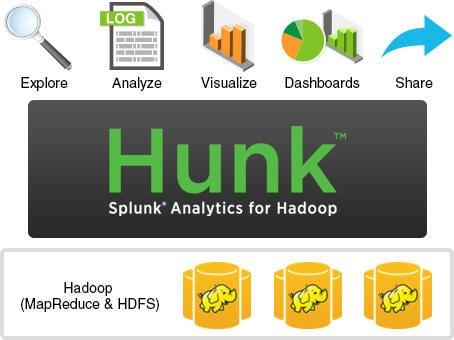
Splunk Hunk is the nickname of Splunk Analytics for Hadoop. Hunk is an app available in Splunkbase. It is great for exploring, analyzing and visualizing data in Hadoop and NoSQL data stores. Hunk offers a shortcut around the hard work of inventing and coding every inquiry in Hadoop. Hunk helps to create insights from big data, without the need for specialized skills, fixed schemas, or months of development.
Elastic Enterprise Search 8.6 enables customers to index searchable content on file systems, network drives, MongoDB, and Amazon S3. With new connectors for network drives and Amazon S3, content indexed can easily be transformed for natural language processing (NLP) use cases with intuitive tooling to test and tune your search experience with the trained model of your choice.
A look at what Apache Arrow is, how it works, and some of the companies using it as a critical component in their architecture. Over the past few decades, leveraging big datasets required businesses to perform increasingly complex analysis. Advancements in query performance, analytics, and data storage are largely a result of greater access to memory. Demand, manufacturing process improvements, and technological advances all contributed to cheaper memory.
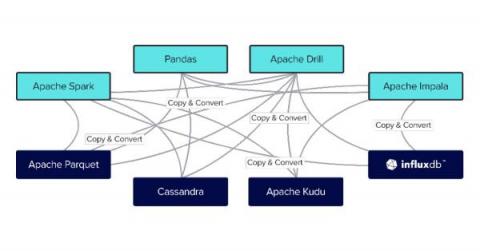
This article was originally published in The New Stack and is reposted here with permission. Arrow makes analytics workloads more efficient for modern CPU and GPU hardware, which makes working with large data sets easier and less costly. One of the biggest challenges of working with big data is the performance overhead involved with moving data between different tools and systems as part of your data processing pipeline.