Phishing and Ransomware: Connecting the Dots!
Phishing and ransomware. Ransomware and phishing. The two are inextricably connected and are now often chained together as the most potent exploit tools in a cybercriminal’s arsenal.


The latest News and Information on CyberSecurity for Applications, Services and Infrastructure, and related technologies.
Phishing and ransomware. Ransomware and phishing. The two are inextricably connected and are now often chained together as the most potent exploit tools in a cybercriminal’s arsenal.
At CircleCI, we care about security - in 2018, we became the first CI/CD tool to meet the rigorous security and privacy standards required by government agencies to get FedRAMP authorized. Now, CircleCI is SOC 2 certified, adding another industry-recognized security accreditation.
In my last post we looked at the structure of AWS IAM policies and looked at an example of a policy that was too broad. Let's look at a few more examples to explore how broad permissions can lead to security concerns. By far the most common form of broad permissions occurs when policies are scoped to a service but not to specific actions.
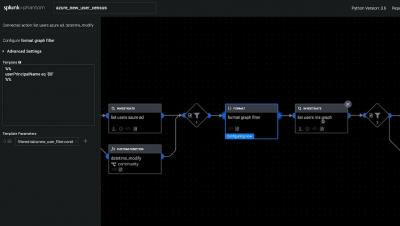
Security orchestration, automation and response (SOAR) tools are most commonly known for automating manual security operations processes in order to expedite security investigations or cyber response. For instance, Splunk’s SOAR technology, Splunk Phantom, is most commonly used to automate alert triage, phishing investigation and response, threat hunting and vulnerability management.
One of the focuses of version 2.9 of Icinga Web 2 will be on access control. For years on now, Icinga Web 2 had a very simple role based access control (RBAC) implementation. This suited most of our users fine. However, there were still some requests to enhance this further. The next major update of Icinga Web 2 (Version 2.9) and Icinga DB Web will allow users to configure exactly this.
Software development pipelines typically cycle through key four processes—design, development, testing and software or update releases. Traditional pipelines perform quality and security tests only after completing the development phase. Since there is no such thing as a perfect code, there are always issues to fix. However, if significant architectural changes are needed, fixing them at the end of the process can be highly expensive.